A home in North Vancouver for $350,000?
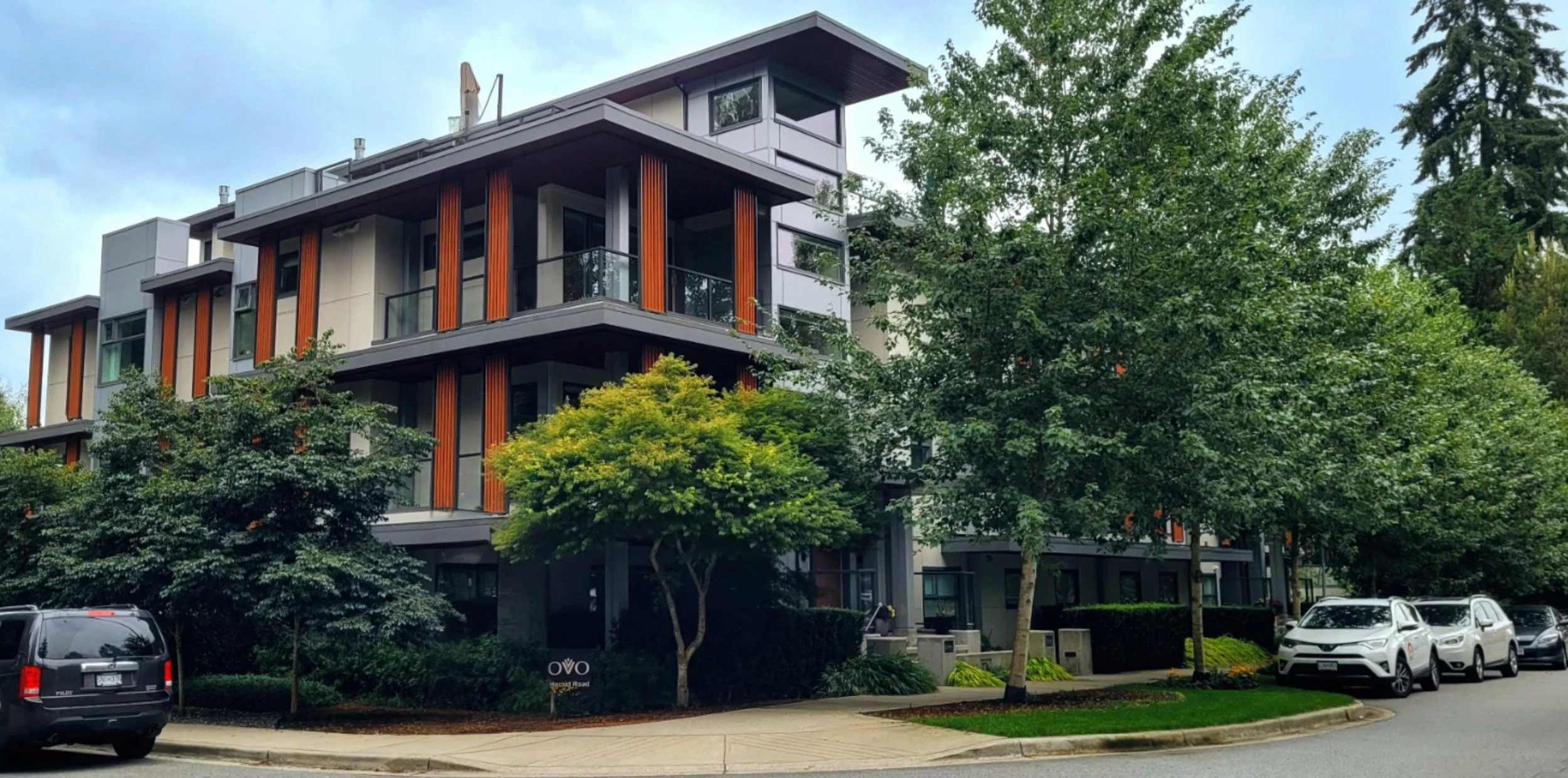
This is an example of what a 12-plex could look like. This is actually the Covo development in Lynn Valley, which is not affordable housing. It has seven large townhomes, but these could easily be cut up into 12 units of different sizes. Photo: Heather Drugge
After March’s housing column, I was resigned to the fact that we just simply can’t build affordable homes on the North Shore. But I kept thinking there had to be a way. So I started again with what seemed like a preposterous premise:
How can we create ground-oriented-ish homes on the North Shore that cost $350,000?
Turns out we can make this happen. We can make, and we don’t need public funding. No grants. No waived development cost charges. No free land. Just a clever piece of zoning that redirects value to people instead of profit. The idea comes from Patrick Condon’s book, Broken City.
I’m going to call it the non-profit higher-density program, and here's how it works.
First, though, who does a $350,000 home actually serve?
Metro Vancouver's 2024 area median income is $95,000. ‘Very low income’ is defined as 30% of that — about $28,500 per year. Affordable housing costs for this group work out to roughly $712 per month, whether in rent or mortgage. A $350,000 purchase price, with a small down payment and today's lower fixed rates, lands in that range.
This is the income group the North Shore has essentially given up on. These are the people who work here and are forced to commute from Surrey or Langley, where they can own a home, because there is simply no housing for them here. People who work in our restaurants, cut our hair, look after our aging family members and so much more.
The core idea: increased density for non-profits only
Municipalities control how much a developer can build on a given lot. Under the proposed Non-Profit Higher Density Program, additional density would be available only to non-profit developers.
Market developers can't access the program.
The non-profit density increase is the engine of the whole program. Because non-profits aren’t trying to maximize returns, they can pass the value directly to buyers through lower prices, subsidized by the higher density. Because market developers can’t access the program, it does not cause land speculation.
The non-profit still has to buy the land and pay all the same development cost charges that a for-profit builder would. The difference is that on a 7,500-square-foot lot, a non-profit could build more homes. The math varies by municipality. In North Vancouver, the breakpoint for deep affordability is 12 homes with 1.7 FSR. Six homes at 1,400 square feet each, sell at market, around $1.4 million each. The other six, at 700 square feet each, sell for $350,000. That's over $300,000 below market value.
It's not a one-size-fits-all program
The 50/50 split in the baseline example above is the most ambitious version of the program — deep affordability, producing six homes at $350K. But non-profits could deploy the extra density however they choose, based on community needs. They could spread the discount evenly across all 12 units, bringing everyone's price down by about 16%, to roughly $1.17 million for the larger homes and $571,000 for the smaller ones.
That serves a different slice of the income spectrum, in particular, the squeezed middle that earns too much for subsidized housing but can't touch the current market. Or the developer could stack discounts in multiple configurations, serving several income levels in a single building. The point is flexibility. The non-profit higher density program is a tool, not a template.
🦹Super nerds only. I had to do a lot of math to work this out. Here’s a calculator (essentially a proforma). You can play with the numbers to model other combinations. Affordability will differ by city, since land prices vary. But you can change that in the calculator.
Some, ahem, wrinkles, we’d have to work out
Okay, there are a few things that make this not exactly easy. Maybe more than just wrinkles.
The first thing would be public acceptance. Big surprise. When you buy one of the deep discount homes, you sign a 99-year covenant. When you sell, the price is capped at what you paid, adjusted for inflation. You build equity in line with inflation. The home stays affordable for the next buyer, and the one after that.
It's a trade-off to get durable affordability across multiple sales. Buyers get a home in North Vancouver at a price tied to their income rather than the market. The community gets a stock of permanently affordable homes that doesn't erode over time. That's a deal worth at least talking about.
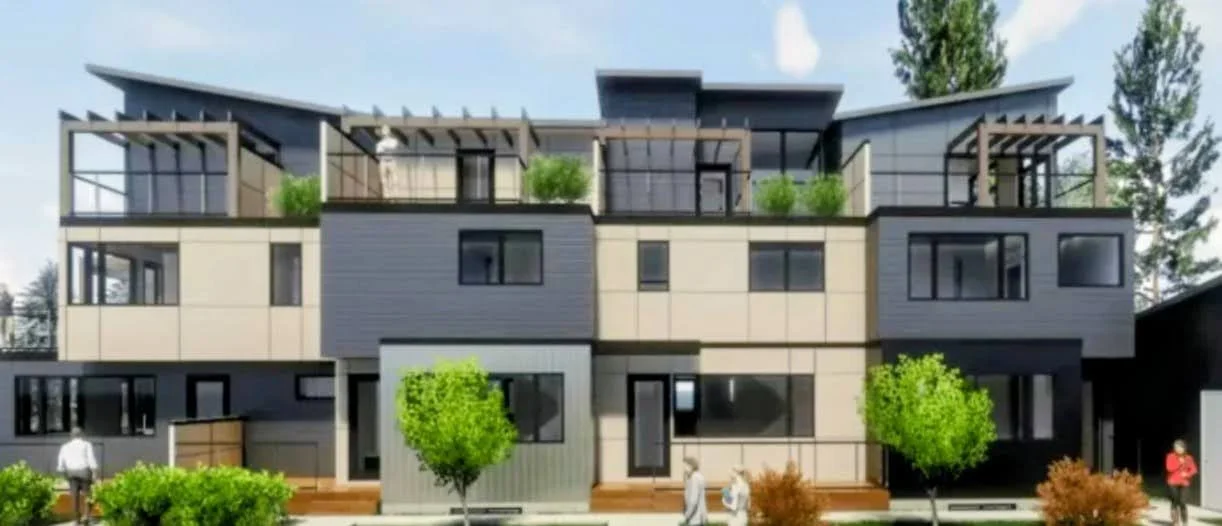
Another example of the scale required to get truly affordable homes, subsidized by the sale of some at-market units.
Okay, then who administers it all?
How about a partnership between local non-profits and BC Housing? The non-profit handles the day-to-day: managing initial sales, maintaining a waitlist of qualified buyers, doing income recertification every two or three years, and supporting owners through resales. BC Housing holds the covenant on title as the legal backstop — the permanent guarantor that the affordability conditions remain in place even if the non-profit changes its mandate or winds down.
The ask to BC Housing is to adapt an existing covenant framework to a for-sale model. In exchange, they backstop a program that creates permanent, affordable homeownership at zero capital cost. It's a good deal for us taxpayers, who would otherwise have to subsidize below-market housing.
What's the trade-off for the community?
The program requires more density, height and lot coverage. That's where the affordability comes from. We’d have to accept taller buildings and smaller setbacks. No parking requirements. Four storeys where there used to be two. Whether that's all worth it is a values question.
Should we continue to lament that affordable homes on the North Shore are just impossible, or should we make deliberate land-use choices to make it happen?
Consider what we get in return: services workers, young families, teachers, healthcare workers, tradespeople, retail clerks and more, who can actually afford to live in the communities where they work. Less commuter traffic. A North Shore that works for more than just the wealthiest households.
That seems like a program worth discussing, no?
If this article resonates with you and your values, please sign up for our mailing list. We're building a group of like-minded people who want to see the vision we've outlined on these pages.