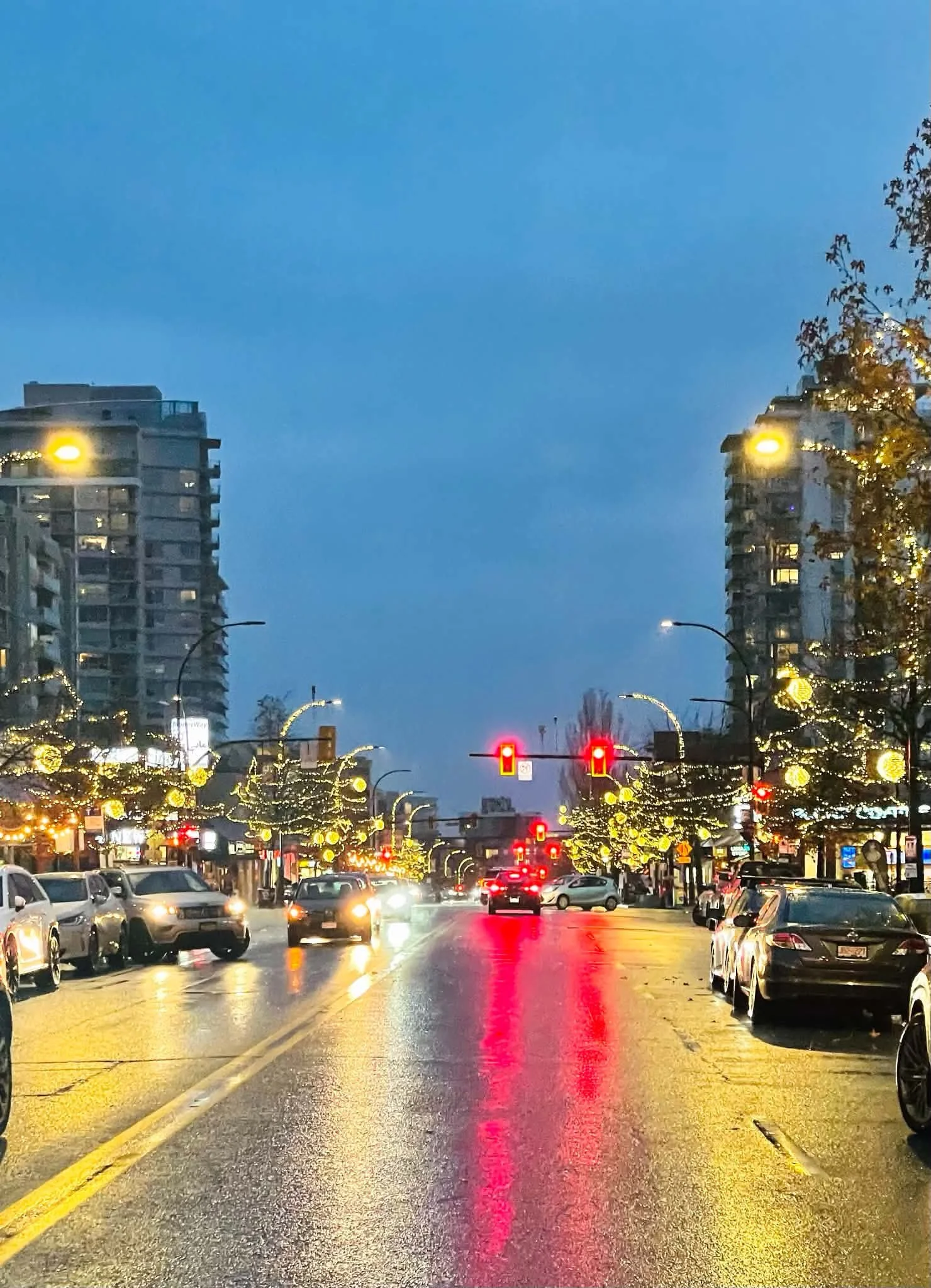
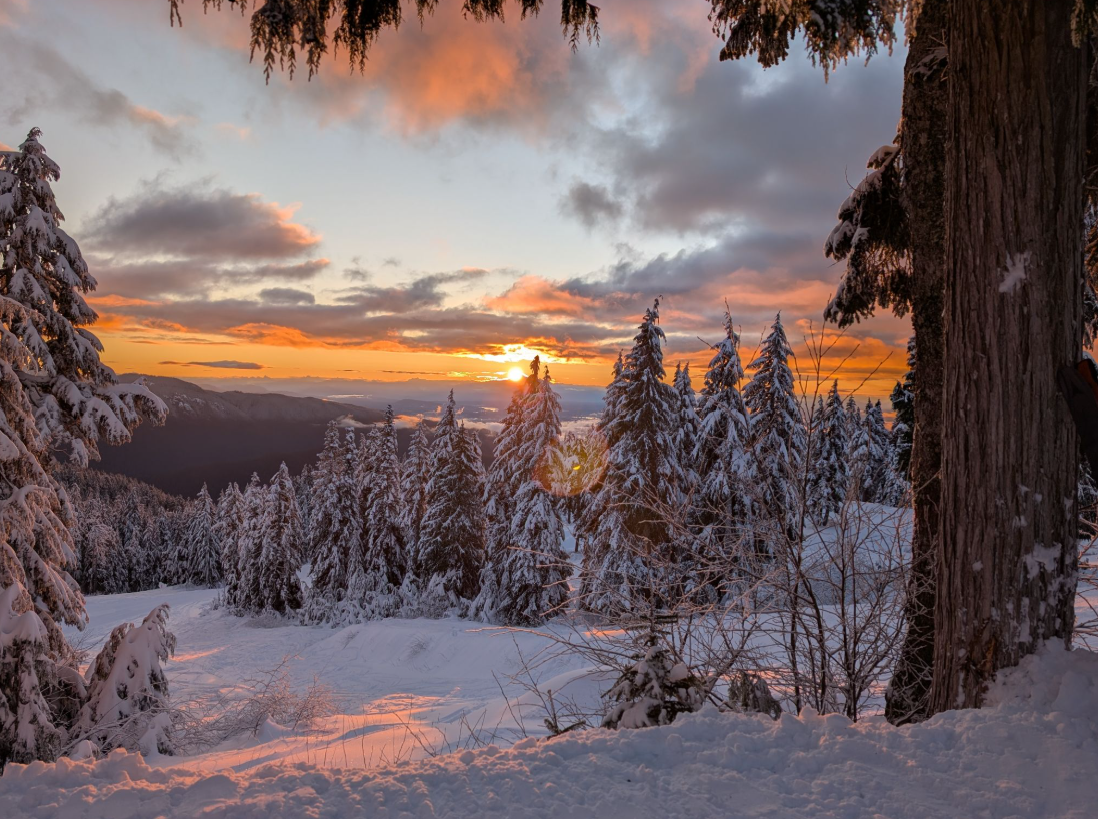
Lights on Lonsdale as winter dark gathers and rains deluge our city. Photo: Ghislaine Courcelles
North Shore voteathon recap
Is it just us? Or were the last three months a blur of election meetings, candidate signs, forums, social media rants and full-on fun for everyone? lol. Let’s look at what went down. First, in August, the Federal by-election in North Vancouver-Capilano elected Braden Caley for the Liberals. Then, this fall, we elected two new councillors in the District of North Vancouver and one new councillor in the City of North Vancouver. West Vancouverites went wild (as politics goes), electing three new council members and a new mayor. One week after the municipal election, the province turned to the BC Conservatives to form a new provincial government.
What does it all mean for us here on the Shore? I’ll start at the top with the federal level and then bring it back home.
Federal vote
When North Vancouver-Capilano Member of Parliament Jonathan Wilkinson stepped down, it triggered a by-election. The winner, Liberal Braden Caley, was a parachute candidate supported by Prime Minister Mark Carney. (I mean, he was here at Jack Lonsdales!) Caley previously worked in the Prime Minister’s Office and, a while back, was also director of policy and communications for Vancouver Mayor Gregor Robertson, now the Federal Minister of Housing. Carney needs the Port to support his plans to diversify and strengthen trade. He obviously believes Caley can help ensure that happens. What many of us here on the Shore may object to is Carney's plan to revert to oil and gas extraction as the path to economic well-being. Look how far that got David Eby. With new announcements on federal funding for Woodfibre LNG and the warm reception from Premier designate, Lorne Doerkson, there’s no doubt that it’s back to the global-warming future for our economy. (For now…)
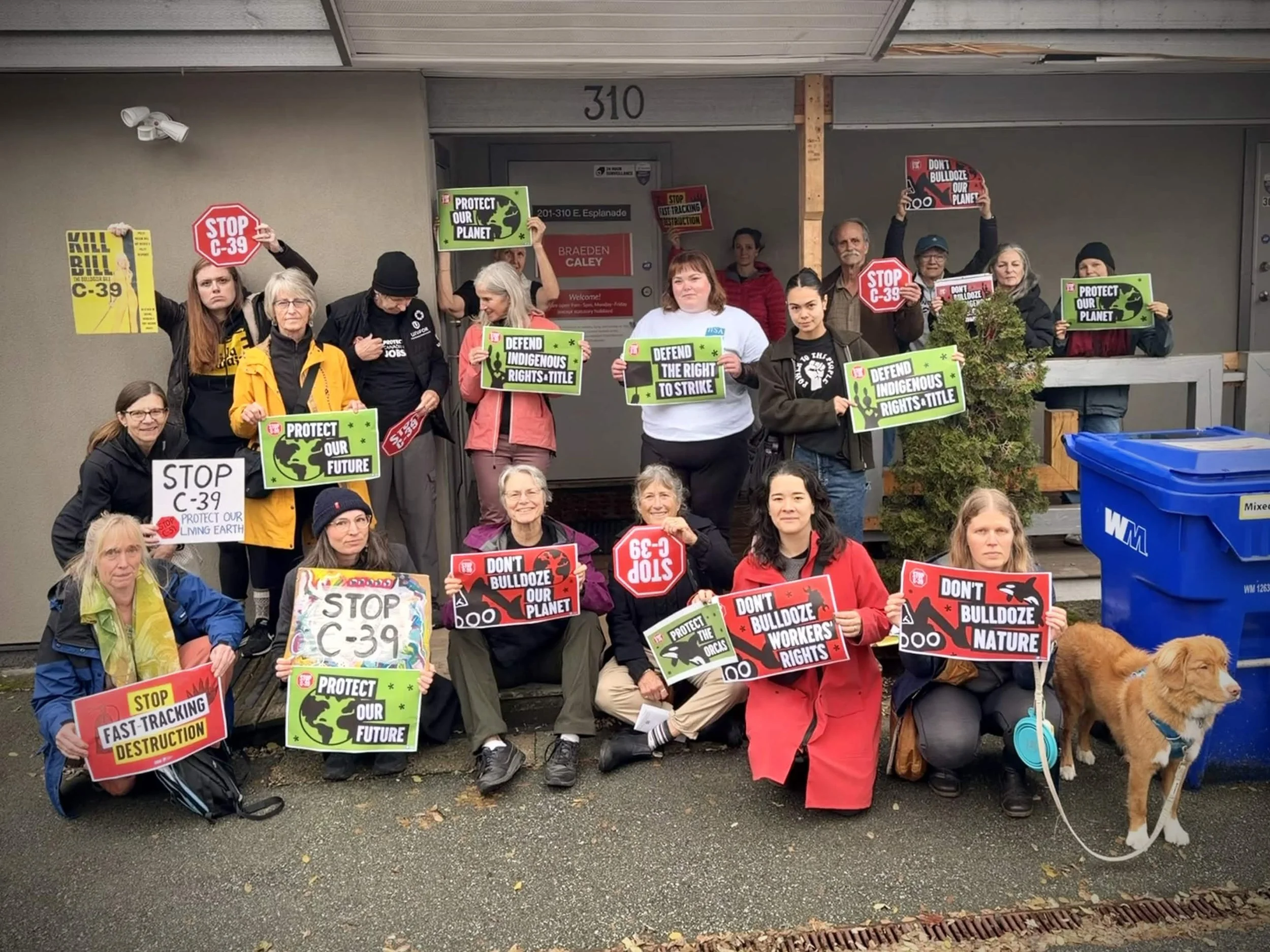
Local residents joined the Canada-wide protest against federal Bill C-39, enabling legislation to fast-track mining and oil and gas projects, which would erode workers' rights and eliminate the need for standard environmental assessments.
Provincial vote
The near-wholesale rejection of the BC NDP means the newly elected BC provincial government gained a historic majority. One of the first things new Conservative Premier Lorne Doerkson mused about was repealing Bill 43 and possibly Bill 44. Bill 43 set 5-year mandatory housing completion targets for each municipality, essentially forcing them to add density. Bill 44 closed some loopholes in Bill 25, the housing bill, compelling municipalities to increase density across all lots, not just in small areas around transit, allowing density of up to 3, 4 or 6 units on most single-family lots. In addition, it eliminated public hearings for new projects that meet existing OCP zoning, making it harder for NIMBYs to oppose them. If the conservatives follow through, it could affect local zoning, though both the District of West Vancouver and the District of North Vancouver had rejected Bill 25 anyway.
Local vote
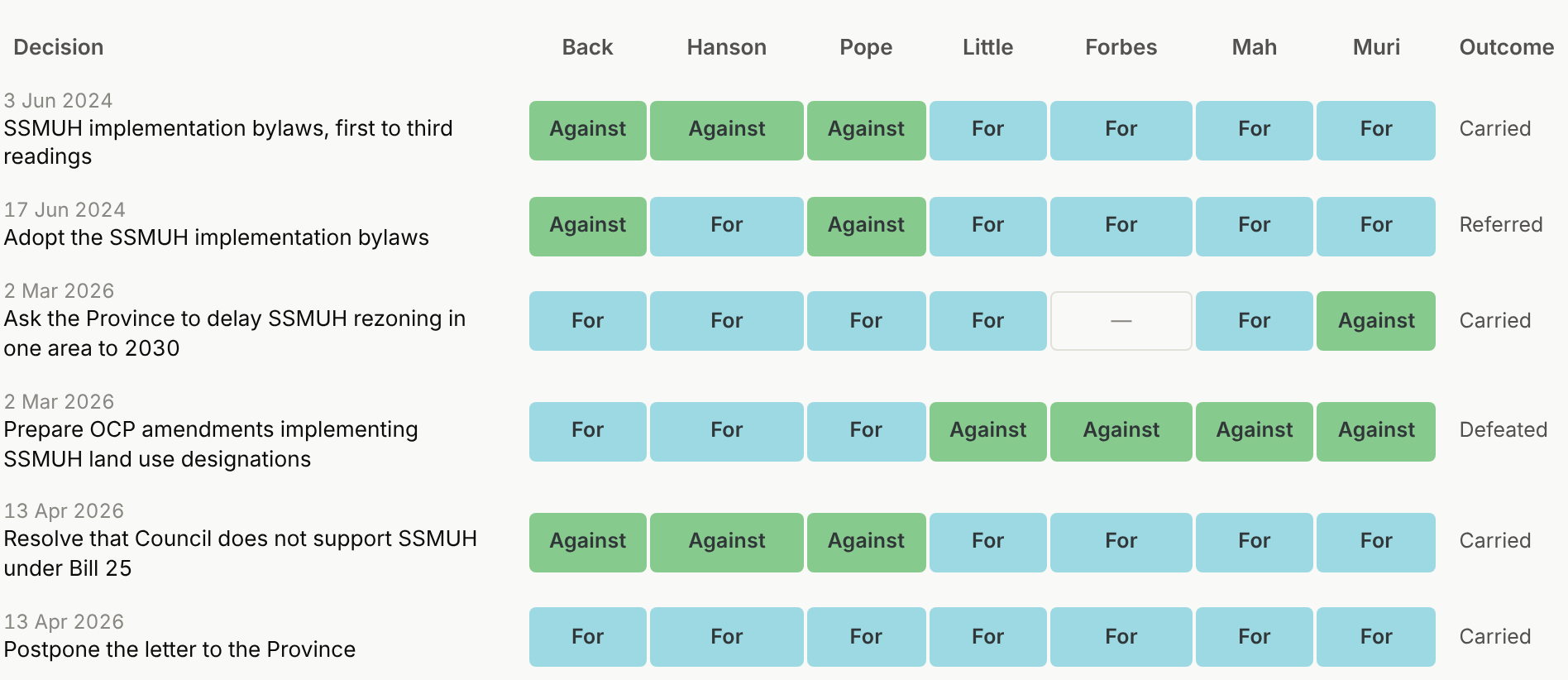
In the District of North Vancouver, the previous council had a roughly 5-to-2 voting split, with the majority generally voting against increasing housing density policies that we believe would result in more affordable homes,as well as voting against active transportation and transit projects that would help more people get around even when traffic is gridlocked. Of course, not every decision goes this way. Council members still have independence and can think critically on an issue-by-issue basis. The mayor, for example, would generally vote in favour of specific developments, but not necessarily for new zoning that would allow higher density by right. Here are a few nerdy charts on housing votes from 2022-2024. Now the council split is a tich more even, with a likely 4-3 vote. Mat Bond's return portends transportation and housing decisions that favour transit, active transportation, and more housing options. What about newcomer Daniel Anderson? He was saying ‘common sense’ a lot during his campaign. The phrase is code for conservatives, plus he’s the spokesperson for the North Shore Neighbourhoods Alliance run by an old conservative pal, David Marley. He’s likely to vote alongside the mayor. But we’ll see.
City of North Vancouver
Despite the best efforts of a preservationist crew of candidates headed by mayoral candidate Mike McGraw, the City of North Van returned all incumbents but one. The sole new voice on council, Andrew Robertson, ran on making it possible for all generations to live on the Shore, with more affordable medium-density options. He will likely add a fourth progressive voice to an already progressive council. Once again, the City will assume most of the responsibility for more affordable homes, fun public spaces and the business and healthcare center that all North Shore residents depend on.
Finally, our westernmost muni saw the most change, with new Mayor Kirk Lapointe (also a fan of ‘common sense’) and three council newcomers. West Van is always gonna West Van, so it’s hard to know what this council will do that will be, cough, actually new. Oh, they’ll roll back paid parking at Ambleside. But wait, that’s not really new. We’ll keep an eye on the shire from our post, far outside the gates of the Capilano Golf Club.
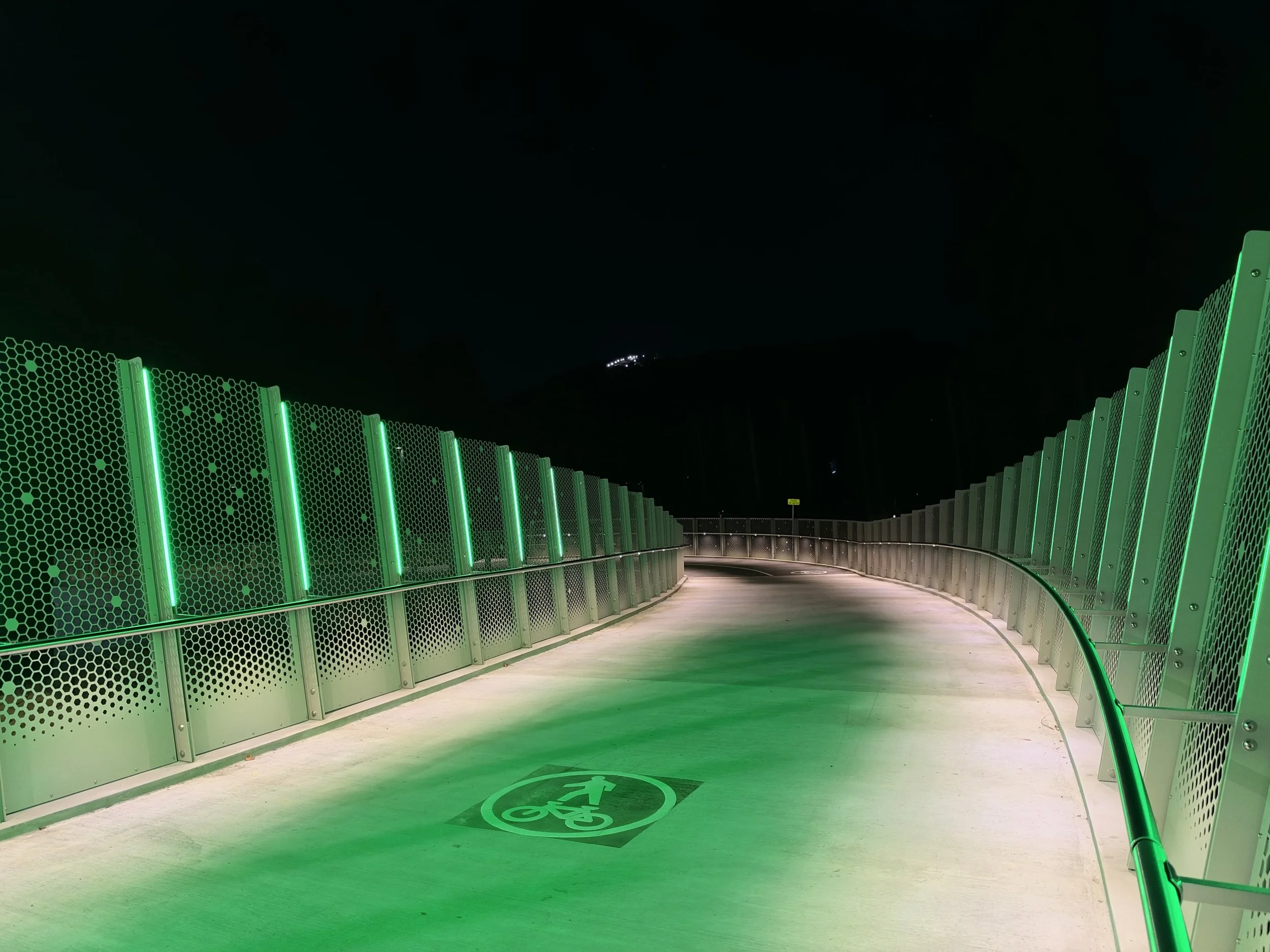
Have you seen the new Crosscut bridge at night? Spectacular! Photo: Duncan Wilcock
More stories from betternorthshore.ca
What are the big things coming up at council for 2027 and beyond?
District of North Vancouver
The DNV will work to update its Official Community Plan during this new council's tenure. An Official Community Plan review and rewrite gives community members the opportunity to envision how we will grow and evolve over the next 30 years. The current Official Community Plan, which prioritized the town and village centers as areas for population and commercial growth, was approved in 2011. Today, the town and village centers are being built out, (mostly) according to the vision from fifteen years ago. In 2021, a review produced eight priorities for action, including speeding up transit, increasing housing diversity, and creating a continuous and connected network of walking and cycling routes. After five years, these sound like the same things that still require action and could be incorporated into the next edition of our blueprint for the future.
Municipal finances will again undergo review. At the first orientation workshop, the new council learned that municipal taxes would not cover municipal services. With approximately 60% of municipal buildings (libraries, rec-centers and more) assessed as in poor or very poor condition, and extensive renewal requirements for basics like waste and stormwater piping, municipal costs are rising quickly. The Mayor and most councillors ran on keeping tax increases to around the rate of inflation at 3%, but staff identified that to keep services running at the current level a 7% increase would be necessary. Somehow, council will need to square this circle. And this is not a single-year problem.
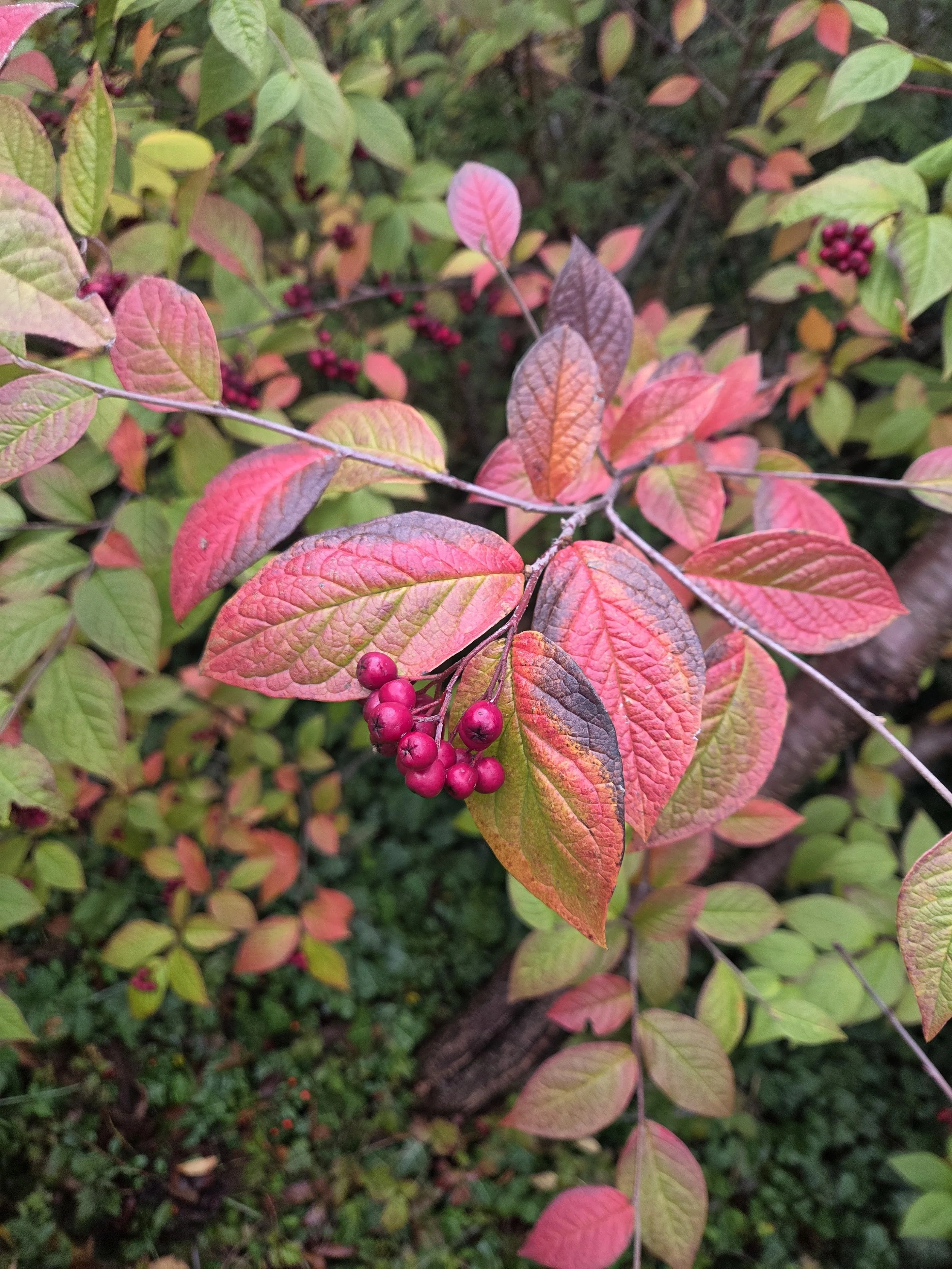
Cotoneaster berries. Photo: Heather Drugge
City of North Vancouver
Moodyville massing
Two projects in Moodyville are moving toward council consideration for significant zoning changes in the area. Taken together, the changes would increase the planned neighbourhood population from around 4,000 people to 5,800 - a 48% increase over what was originally envisioned in the 2016 rezoning. It’s a significant lift, and the city will have to decide whether or not this area is right for that increase.
The Trails' next phase asks the city to consider a change that would allow the maximum building height to increase from four to five floors to 12 to 16 floors, increasing overall density from 1.25 FAR to 2.56 FAR. In terms of population, the current zoning would accommodate about 850 residents, and the amendment would accommodate around 2,000. Total new homes: 926 units (mostly strata) and 62 below-market rentals. At the old bus depot on 3rd street, TransLink is asking the city to consider moving maximum building heights for their project from four floors to 12 and 14 floors, increasing density from 2.5 FAR to 3.9 FAR. Under the current OCP, that land would accommodate about 400 residents. With the amendment, it would accommodate around 650. Total new homes: 360 units: 352 secured rental apartments (35 below market) plus 8 rowhomes.
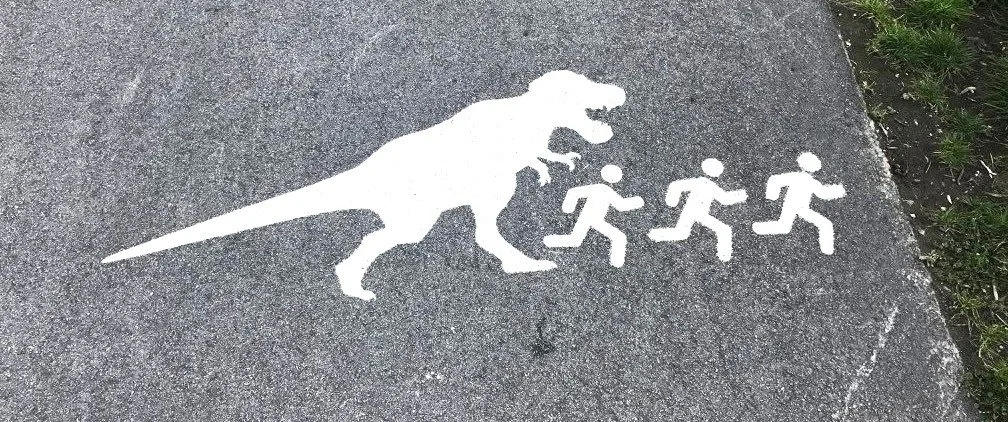
Spirit Trail art. Photo: Duncan Wilcock
With the completion of the Harry Jerome Rec Center, the adjacent lands where the old rec center sits will now be the City's focus. What will happen there depends on whether the land is sold outright or leased to a developer. In 2022, an estimate for the land sale was $167 million. That would easily cover the $109 million loan the city took out at the time with the land as collateral. The city pays only the interest on this loan for 5 years. If the land hasn’t sold or another deal struck before 2030, the City starts paying down the roughly $109 million from the tax base, rather than just servicing the interest. So, the site sale or lease will be important to city finances. What will go on the land is defined in the Official Community Plan, recently revisited in response to the provincial government’s housing requirements. The city amended the Official Community Plan to increase the floor space ratio from 2.5 to 2.9 times the site area, adding capacity for roughly 180 more homes, making it a more attractive development site and likely increasing the sale price to help pay for the new rec center.
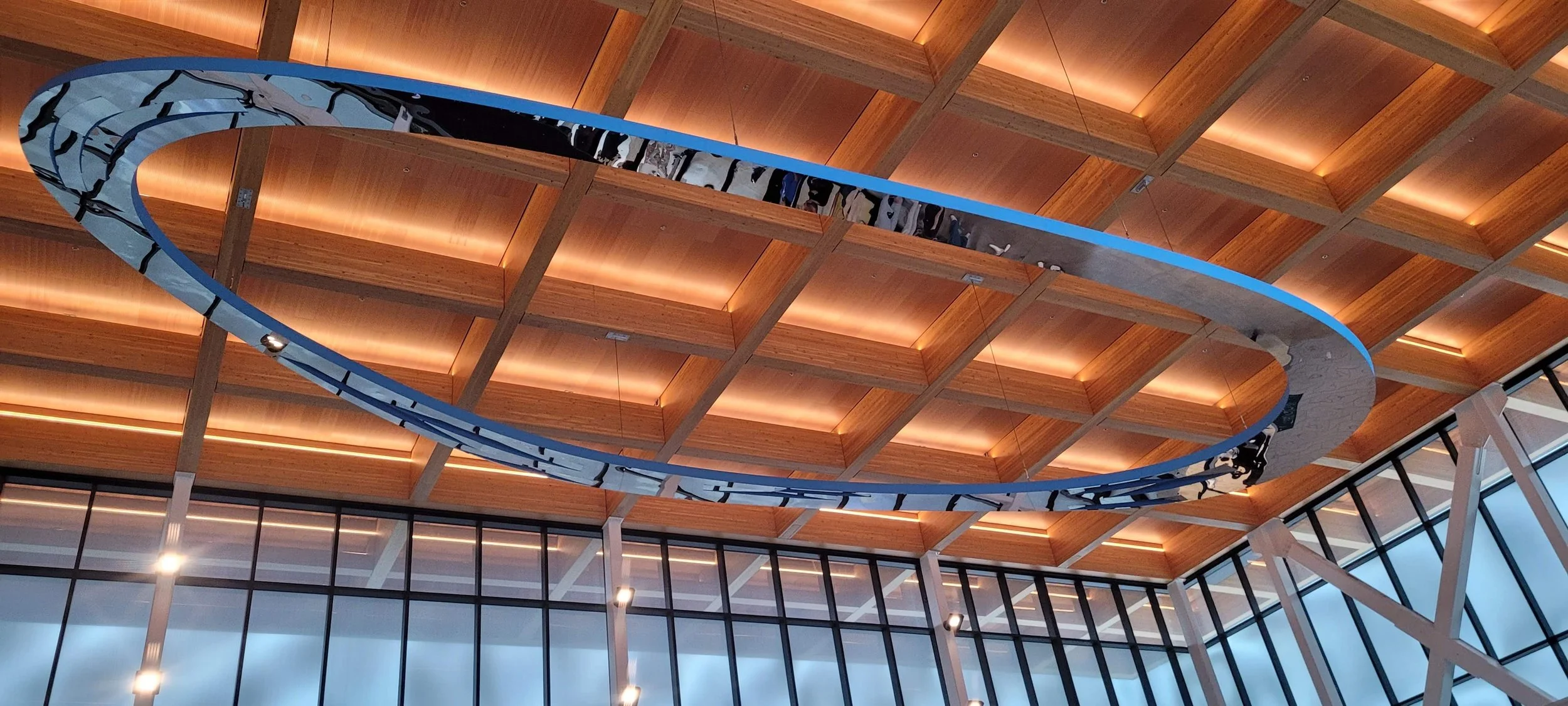
Artwork in the majestic lobby at the new rec center. Photo: Heather Drugge
District of West Vancouver
While Mayor LaPointe campaigned on keeping tax increases to inflation (3%), staff project that maintaining services would require a 7.9% tax increase in 2027. In 2026, council wrestled a similar gap down to 3.43%, but to get there, drew $1.9M one-time from facilities and infrastructure reserves and eliminated a $2.6M annual operating contribution to asset reserves. The same reserves that kept 2025 and 2026 tax increases low are now depleted as projects were completed, reducing the 2026 facilities reserve from $13.5M to $2.2M. Getting to 3% for 2027 will likely mean cutting services, staff, or delaying asset renewal. Or more paid parking? Doubtful.
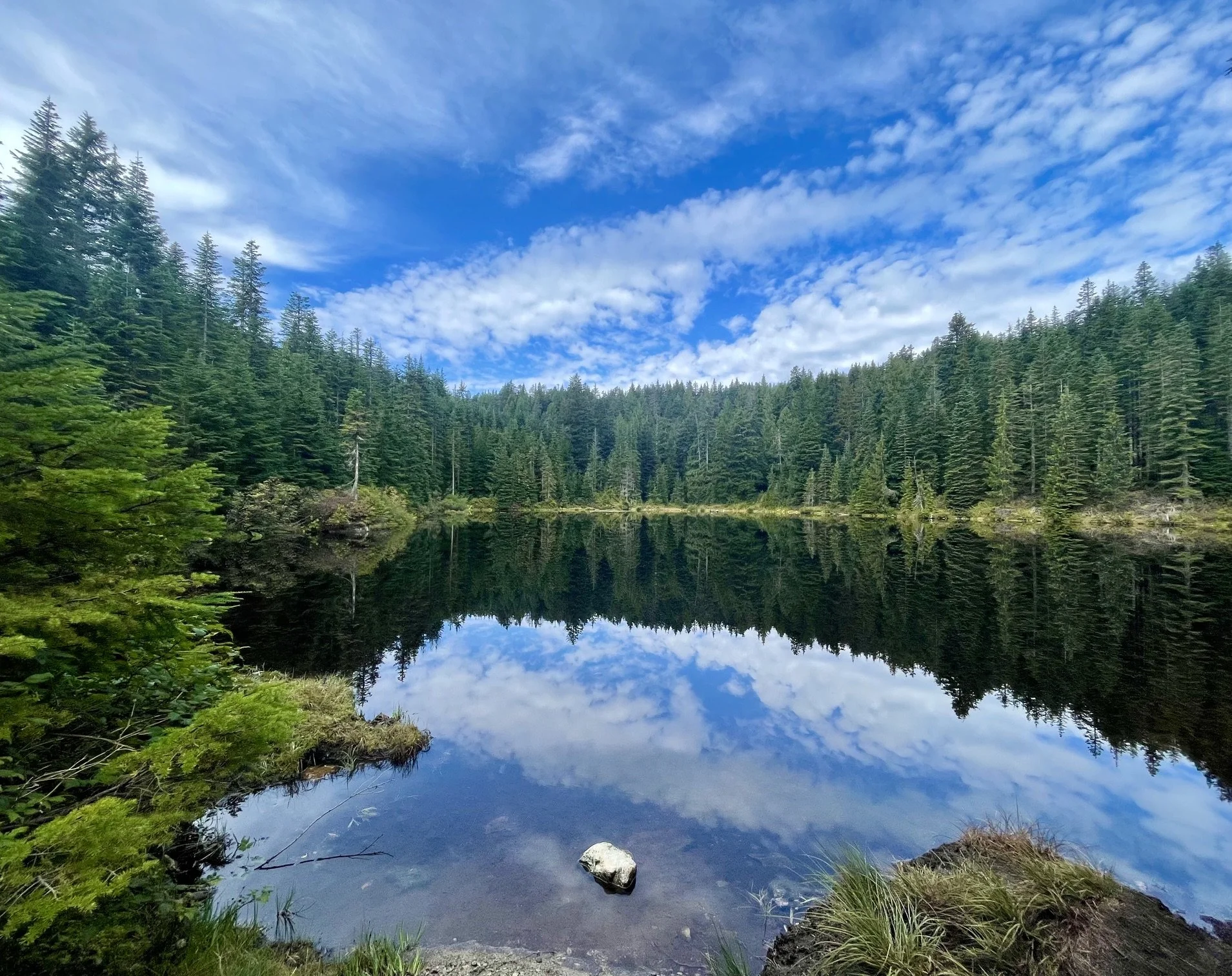
Fall at West Lake on Cypress. Photo: Ghislaine Courcelles
Better North Shore and the municipal election
We tried some new things for the municipal election. Our All Candidates Meeting was amazing. We tried to give candidates a forum to answer questions they weren't getting at the other ACMs. Many people on the Shore do think about more than property tax hikes, adding more lanes to the Cut, and preserving our single-family neighbourhoods. We’re concerned about our kids and their kids' ability to live here if they choose. We care about how the way we live impacts the climate and, by extension, our natural and built environments. We care about people's freedom to get around safely by whatever means they choose. We care about affordable homes for all in every neighbourhood. These are the kinds of questions we brought to the fore, forcing candidates to think about - and address - issues that they hadn't been asked about in public before. Our focus is on the future, not on preserving the past.
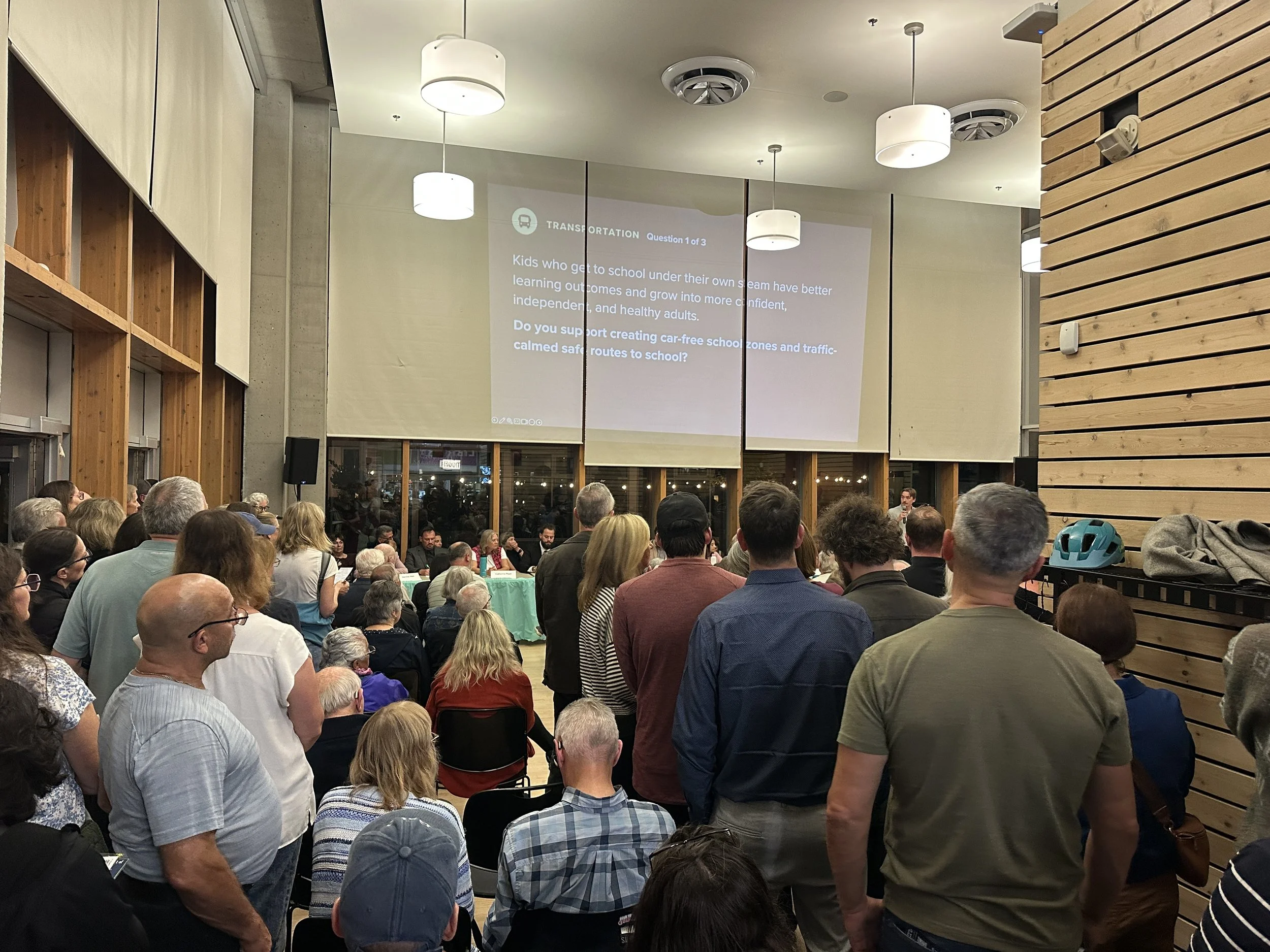
Scene from the packed out Better North Shore All Candidates Meeting. Next time: Bigger room! Photo: Greg Robins
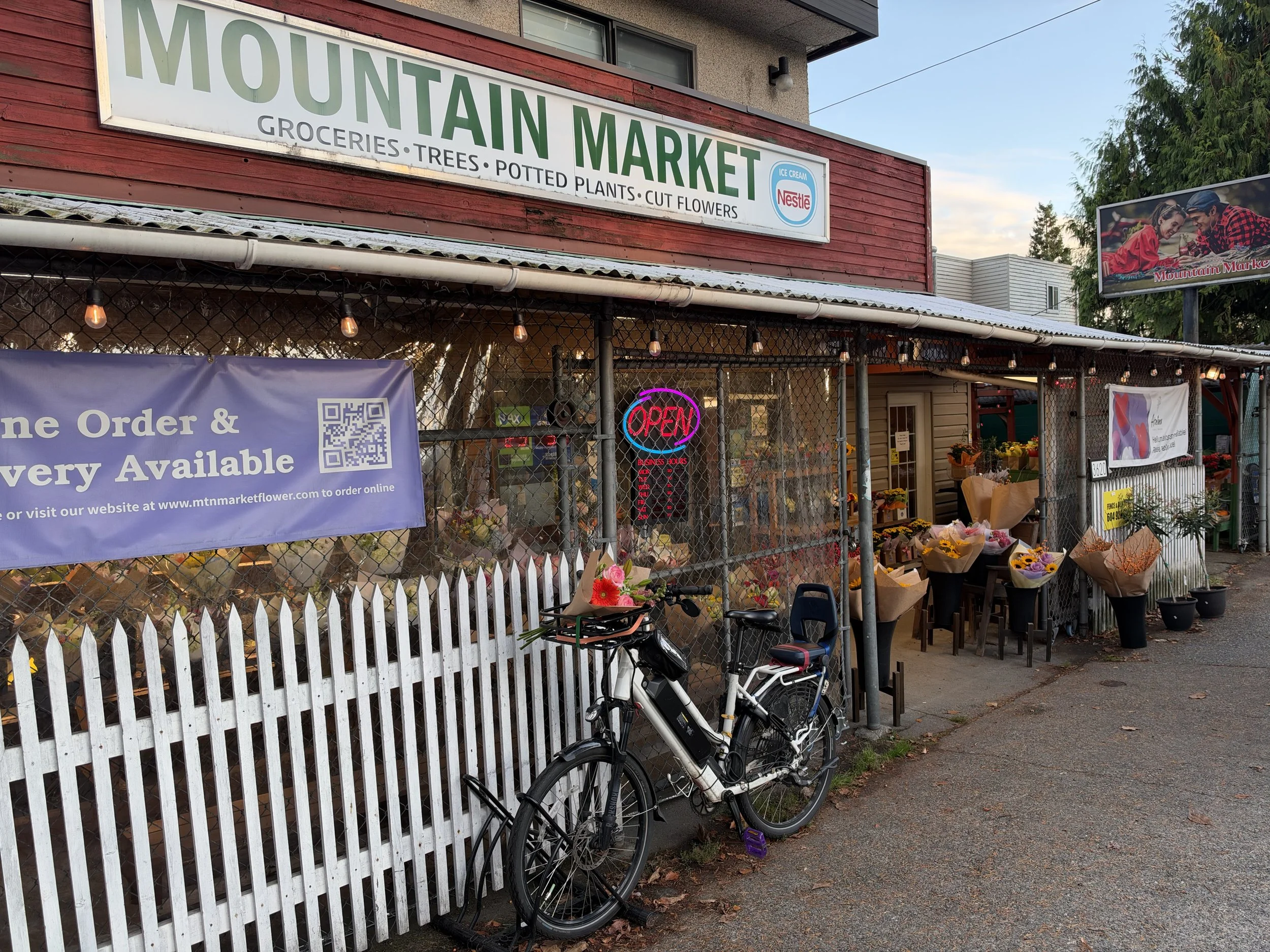
Aren’t corner stores the best? Photo: Duncan Wilcock
Community events
Book Club for Climate Optimists
An online book club meets on Mondays at 7:00 p.m. on Nov. 30
Register online, in person or by phone, and you will receive the Zoom link on the day of the meeting.
New North Shore Climate Action Hub

Interested in joining a network of people committed to climate? Sign up to receive information about our new North Shore Climate Action Hub.
Green Infrastructure is Better Infrastructure: The Business Case for Green Roofs and Natural Assets
Webinar: Tues. Nov. 24 (12-13:00): Green Infrastructure is Better Infrastructure: The Business Case for Green Roofs and Natural Assets
As our cities and towns age, the costs incurred by essential infrastructure are increasing. The cost of maintaining existing grey infrastructure (e.g., roads, bridges, civic buildings, water and sewer lines) is in the $100s of millions. Any new infrastructure required to service projected housing needs will drive those costs to over a $trillion. Given these are essential community services, they cannot be value engineered out. In this webinar, Kim will show how green infrastructure can save $millions in infrastructure costs, while also providing social and environmental benefits. Register here
Where on the Shore?
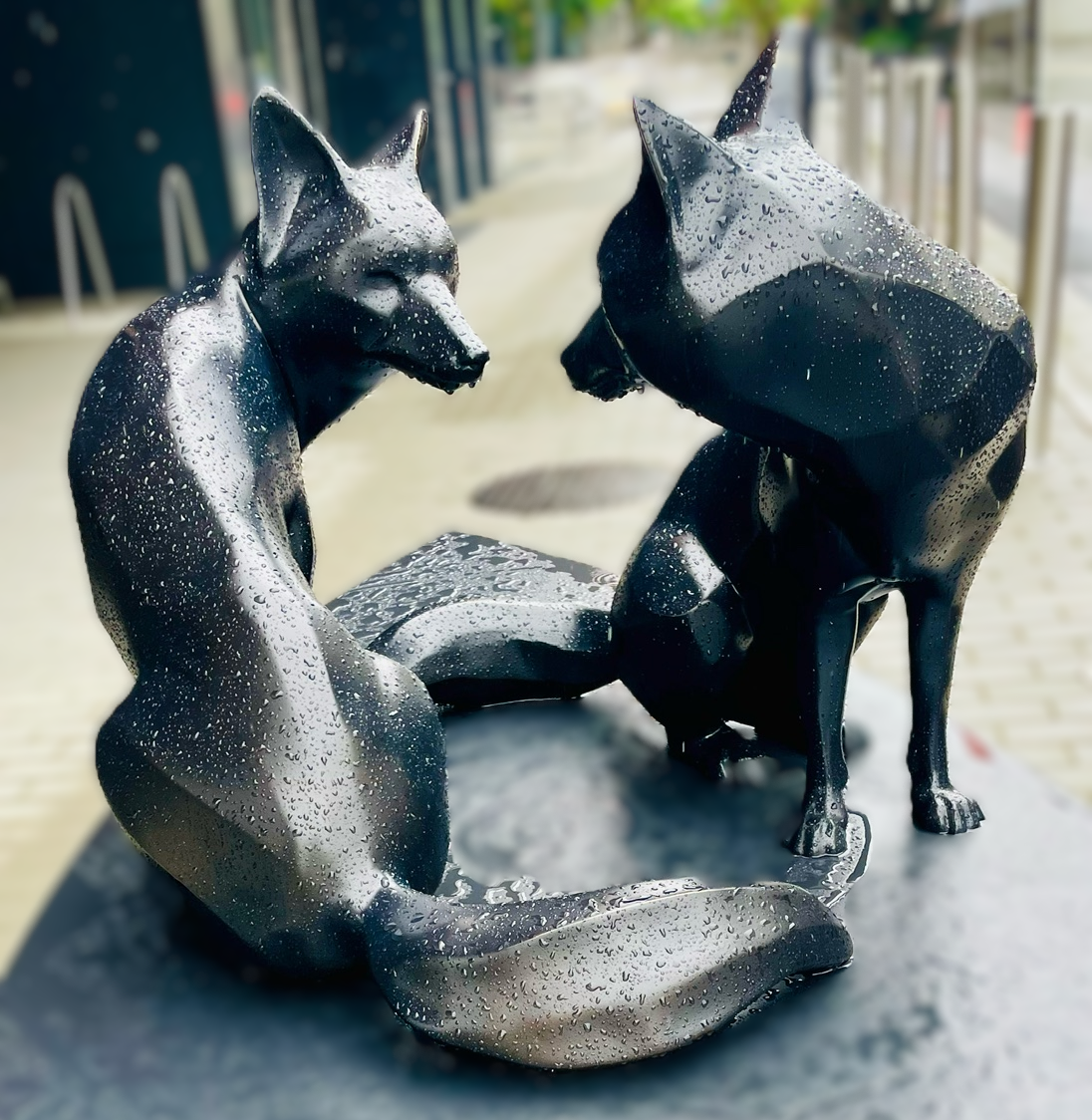
The first person to email us the location of this foxy circle will receive a Better North Shore T-shirt. (Past winners are ineligible) hello@betternorthshore.ca Photo: Ghislaine Courcelles
Join the conversation: Hop into our Discord community to chat with your neighbours about North Shore livability. Not subscribed yet? Sign up for the newsletter and forward this to a friend who cares about the Shore. Thanks, we really appreciate it, Martyn, Heather, and Duncan 🌲