

Brief history of development
The First Nations’ name for Mount Seymour is Ch'ich eliwxih, which refers to both the mountain watershed and a historic village site at the mouth of the Seymour River. The name may derive from the Squamish word ch'ich, meaning ‘pure land’.
Skiing started in the 1920's when a logging road was built ending in a parking lot 500m up the mountain.
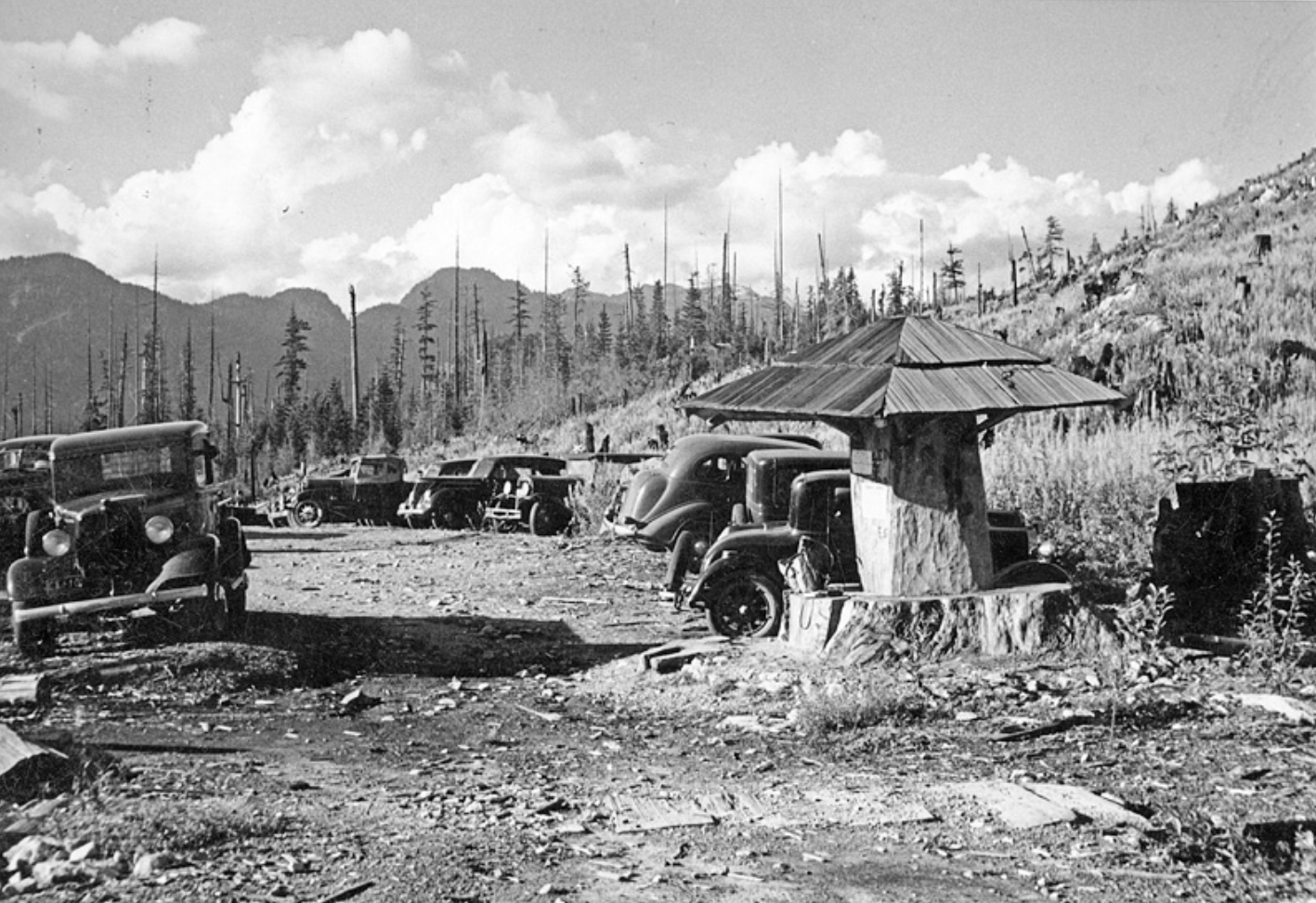
The parking lot and Mushroom Shelter with a bulletin board became the starting point for hiking and skiing. The mushroom shelter still exists. Photo: North Vancouver Archives
In 1936, the area was designated a provincial park, and in 1938, under the ownership of Swedish emigrant Harald Enqvist, a lodge was built with a ski rental and a cafeteria. In 1949, the Government of British Columbia extended the road to its present location and bought the ski area. The Government did not have the experience to run a ski area, so they issued Mr. Enqvist the first Park Use Permit to operate the area. When the permit expired in 1951, the government hired a concessionaire to run the lifts, ski school, and cafeteria. Under government ownership, the Mystery Peak double chairlift was installed in 1977.
The government retained overall ownership until 1984, when it privatized the operation. Under the contract, the private resort operator owns all the equipment and facilities but pays rent for use of the parkland. The contracts were for 60 (or 50) years and could be renewed after 30 years. Similar arrangements were made at the time for ski resorts operating in Cypress Provincial Park and Manning Provincial Park.
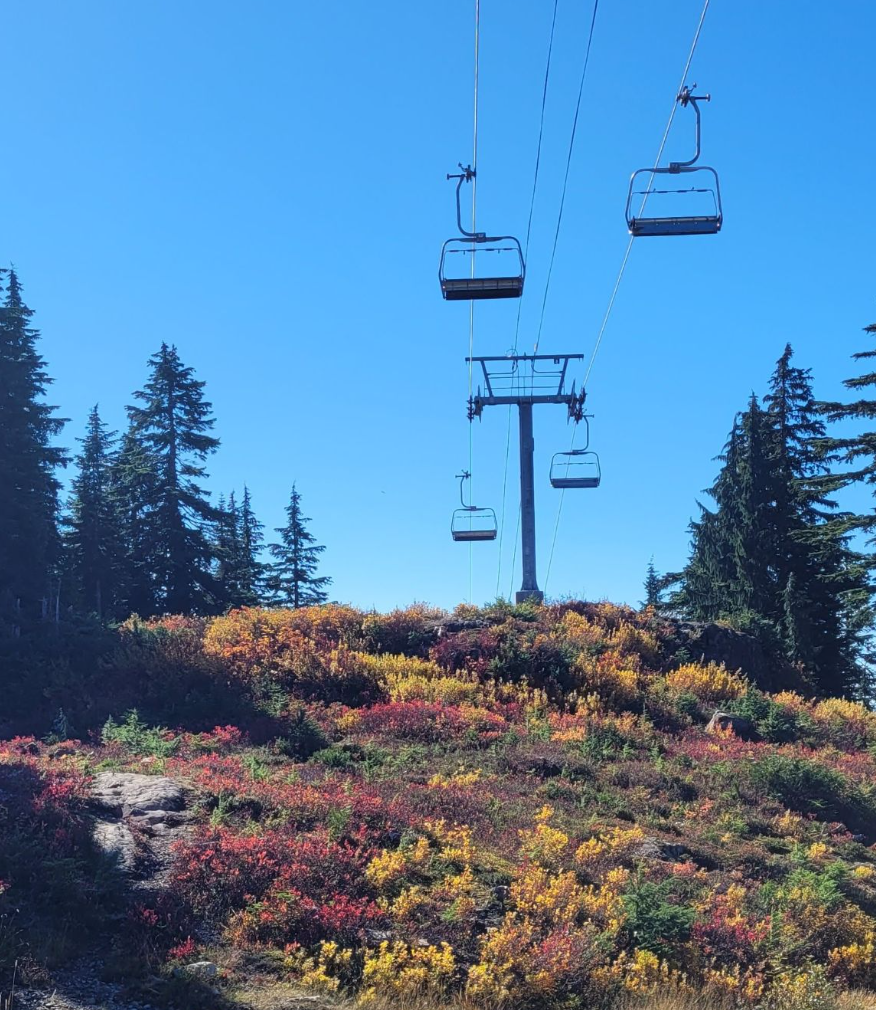
The existing high speed quad Mystery Peak chair. Photo: Heather Drugge
The ski area has been run by the Wood family since 1984. They installed the Lodge chairlift in 1986, the Brockton chairlift in the early 1990s, replaced the Goldie rope tow with a magic carpet in 2011 and upgraded the original Mystery Peak chairlift with a high-speed quad in 2012. Next, the Lodge chair was replaced with a Doppelmayr fixed-grip quad with a loading conveyor belt in 2023.
A new resort development plan
40 years have passed since the last plan in 1984, when the private contract was initiated. Vancouver has changed significantly since then. Climate change and a huge population increase: 1.3 million in 1984 to 3.1 million now have put pressure on resort operations, spurring a new plan. The proposed development plan is split into 5 phases (1a, 1b, 2, 3 and 4) over 60 years. It’s hard to look that far ahead, as who knows if there will still be snow on our local mountains by then? Not to mention that I will be long dead 🙂. While there are no proposed dates for any of the phases, this article only introduces the proposed changes in Phases 1a and 1b.
PHASE 1 of the proposed plan
1a Winter changes
The first phase will add two new magic carpets (twinning Goldie and adding a new Mushroom carpet). As anyone who has been on the mountain on a weekend or holiday in the last few winters will know, the current Goldie carpet has major lineups. Twinning it should give us all much more time on snow and less waiting around. The new Mushroom carpet will be great for beginner terrain park skiers and boarders, since they currently either walk up or join the lines on the Goldie or Lodge lifts.
1a Summer changes
To make the resort a year-round destination, several new activities are envisioned: ziplines, an aerial adventure park, a learn-to-mountain-bike area, and disc golf course. The idea is to accommodate a broader range of interests and ages for summer. Currently, the only summer activities available are kids' summer camps.
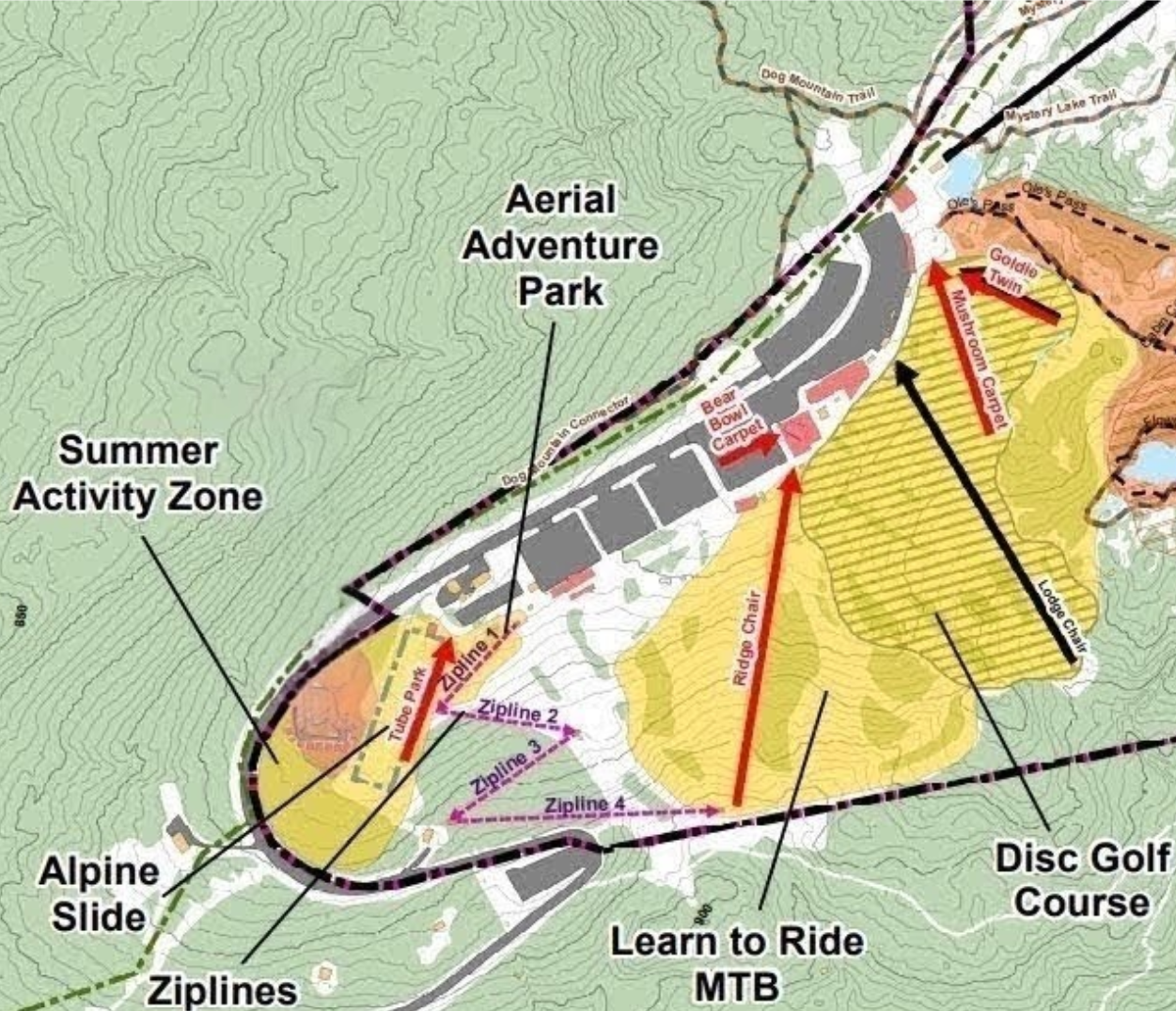
Summer plan for new activities. Image: Ski Resort Development Plan
Concerns with proposed Phase 1a changes
Many people have concerns with the plan. Here’s a recap:
Cultural impacts: The Tsleil-Waututh, Musqueam, and Squamish Nations have been consulted, resulting in changes that have been incorporated into the current plan. It’s unclear what changes were made, and the proponent says consultation will continue.
Commercial activities in parks: Fourteen outdoor recreation, conservation and community organizations have sent a joint letter to BC Parks calling for better public consultation and more transparency around proposed Ski Resort Development Plans for Mount Seymour, Cypress and Manning provincial parks. At Mount Seymour, proposed expansion beyond the existing Controlled Recreation Area has raised concerns about impacts on backcountry access and sensitive areas around De Pencier Bluffs, Goldie Lake and Flower Lake.
Wetland impact: The area in Flower and Goldie lakes, where the glamping is proposed, is a thriving wetland with hundreds of plant species, not including mosses and lichens. Changes to wetlands will negatively impact biodiversity.
Backcountry access: The resort is committed to working with the backcountry community to improve the existing alpine access along the Seymour Main trail by widening it for 2-way travel. A dedicated backcountry ski route from Brockton summit will also be developed.
Vehicle traffic and parking: Phase 1 will increase summer traffic to the mountain, but likely less than there already is in the winter, so the impact should be minimal. Winter traffic is unlikely to increase in phase 1 since there’s no new terrain proposed.
Wildlife impacts: Although Phase 1a stays within the current official recreation area, the proposed ziplines would enter an area that is currently unused, so any wildlife in that area would likely be pushed out.
Phase 1b
Winter changes
The resort proposes replacing the current Brockton Chair and adding three additional lifts, staying within the current resort boundary. The new Summit chair would provide access to more and higher terrain. This area faces east and is shaded by bluffs, resulting in faster snow accumulation and slower melting.
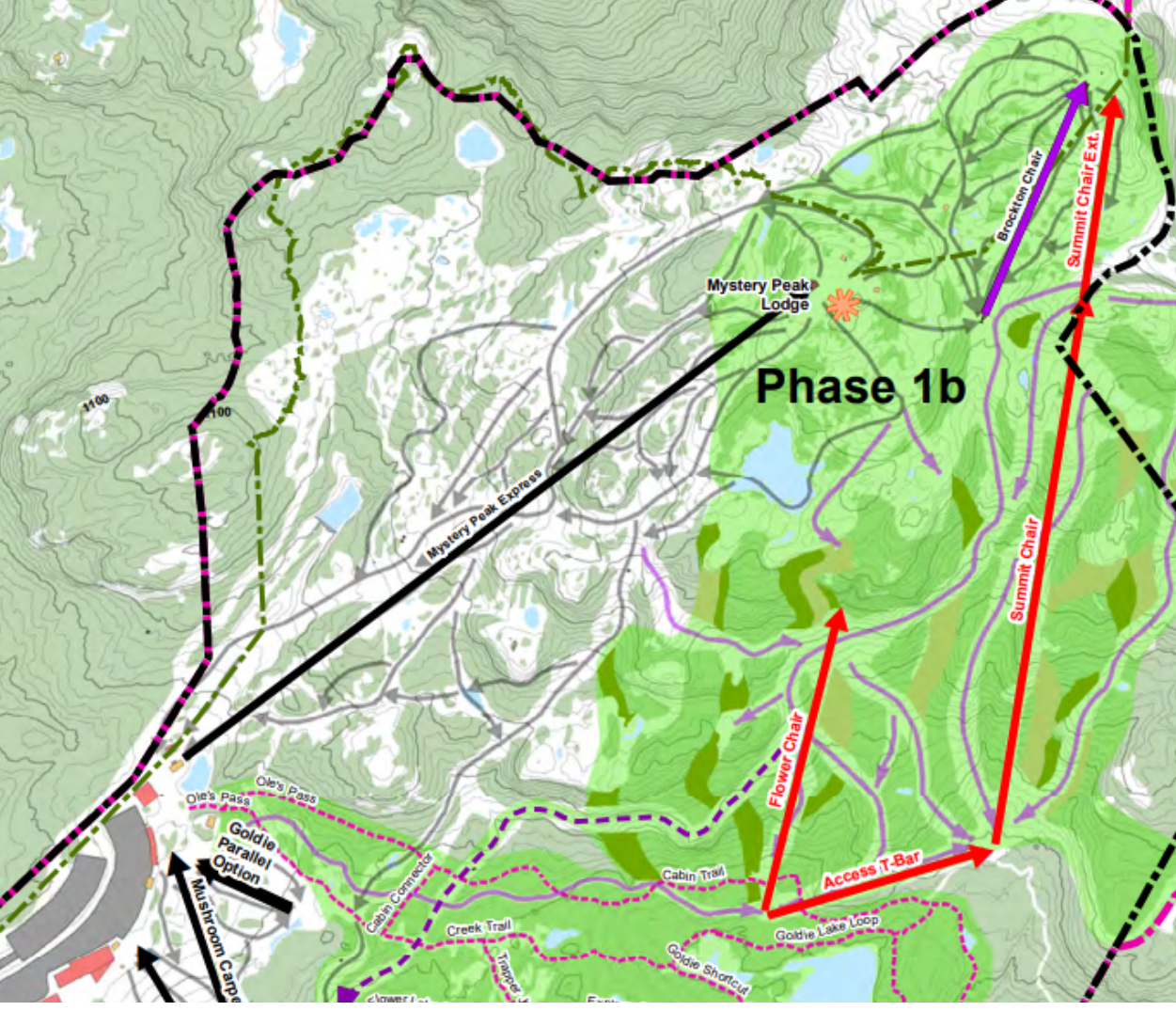
Phase 1b envisions new lifts: a Flower Chair, Access T-bar and the Summit Express. The existing Brockton Chair would be either removed or replaced. Image: Ski Resort Development Plan
Proposed accommodations
Phase 1b adds cabins and glamping, which could be used year-round for those who want to extend their time up on the mountain without driving home. That is a more significant change: from facilitating activities to providing accommodations.
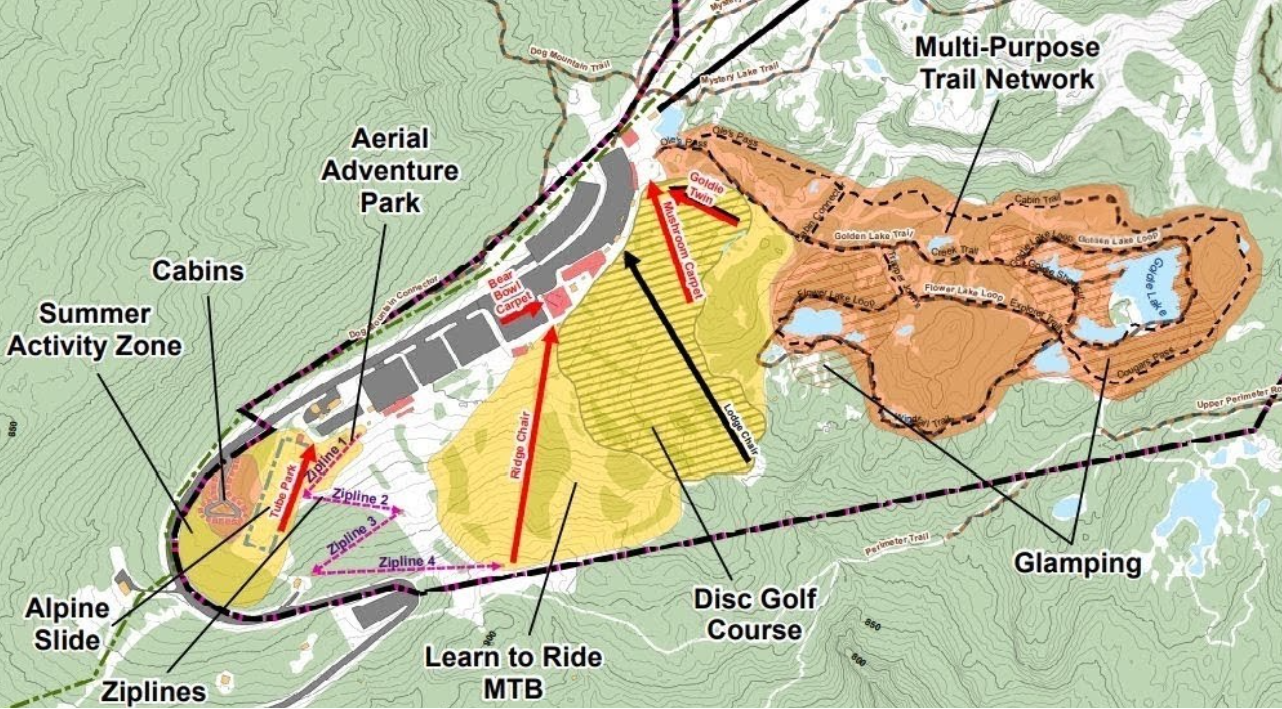
The red lines indicate where new lifts would go, as well as the locations for disc golf, glamping, ziplines, and cabins. The tube park would be moved further south near the cabins and a summer activity zone in Phase 2 along with a new Ridge Chair. Image: Ski Resort Development Plan
Concerns with phase 1b
Vehicle traffic and parking: Phase 1b will likely attract more people to the mountain in the winter, as the new lifts and terrain will accommodate more skiers/boarders. Parking would be expanded 40% from 835 to 1,350 to accommodate some/all of the extra vehicles.
Wildlife and environmental impacts: Although this phase stays within the current official recreation area, the new lifts go into an area that is currently unused, so wildlife would likely be pushed out. Sensitive habitats like the wetlands around Flower and Goldie lakes would be negatively impacted by the proposed glamping.
Proposed changes to existing buildings
The current lodge and rental building would be enlarged, and a new patio added to provide panoramic views of the Fraser Valley. On the mountain, a full-service restaurant would be built at the top of the Mystery Chair. The resort hopes to use renewable energy to support these expansions. It’s not clear from the plan when these changes would be made.
Phases 1, 2, 3 and 4 - Winter
While Phase 1 mostly seems reasonable (maybe not the glamping around the lakes area), subsequent phases would dramatically alter the park's wilderness values.
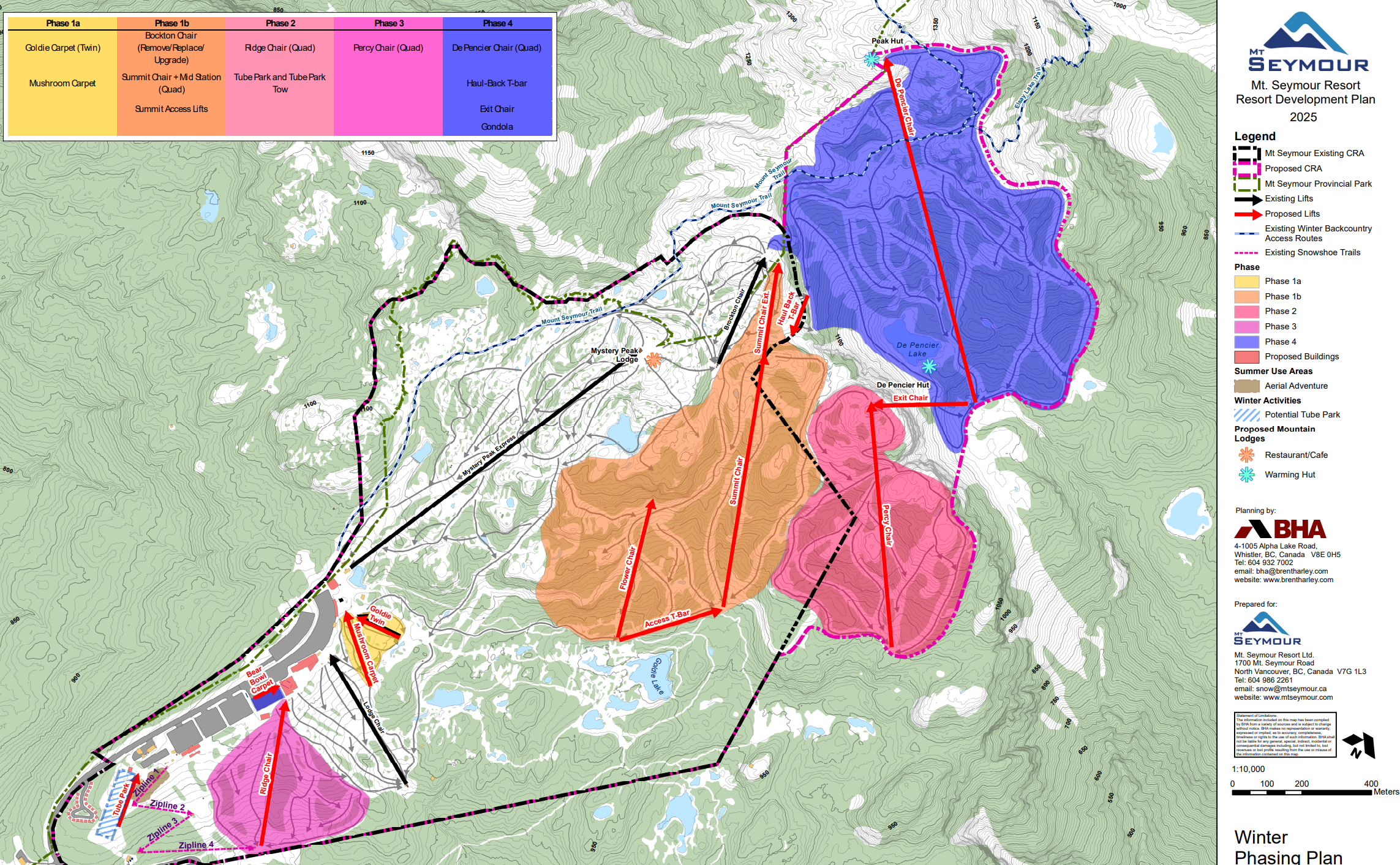
The whole winter picture including phases, 1,2,3 and 4.
Phases 2, 3 and 4 propose:
More lifts higher up than the ones noted above, plus warming huts
A much larger footprint for the commercial resort area
New alpine summer trails
A skywalk like the one at Whistler
via ferrata (a protected climbing route built with steel cables, rungs, and suspension bridges)
New tube park
A gondola from the base of Seymour to improve access and reduce vehicle traffic
Next steps
A public survey was conducted to gather input between May 26 and July 24, 2026. Now that this survey is closed, the next steps are:
BC Parks will publish a summary of the feedback. Over 3,200 surveys were completed. BC Parks says the results “will be posted here in a summary report when it is it ready” and estimates winter 2026.
The resort revises the plan and submits it. Mt Seymour Resorts will review the survey results and its own engagement, revise the plan, and submit a final plan to BC Parks. It will also publish a “What We Did” report describing the changes. The resort’s plan page has had no updates since the comment period ended. It mentions no summary, revised plan or submission yet.
BC Parks makes the decision. Its review considers whether the plan improves recreation, keeps the resort viable, fits park management goals, reduces impacts, and reflects public, interest holder, and First Nations feedback.
Even if part or all of the plan is approved, each step in the process (lifts, trails, buildings, etc.) will still require individual approval by BC Parks, considering environmental, cultural and community impacts.
Update: The October 24 snap election brought in a new provincial government, so a new minister will oversee BC Parks. There’s no information about what the Conservatives might think about the plan.
About the author
I first moved to the area in 1993, and have been skiing and hiking on Mount Seymour ever since. I was a part-time ski instructor from 2012 to 2026, and currently work for the North Vancouver Rec. Centre, leading hikes across the North Shore, including on Mt Seymour.
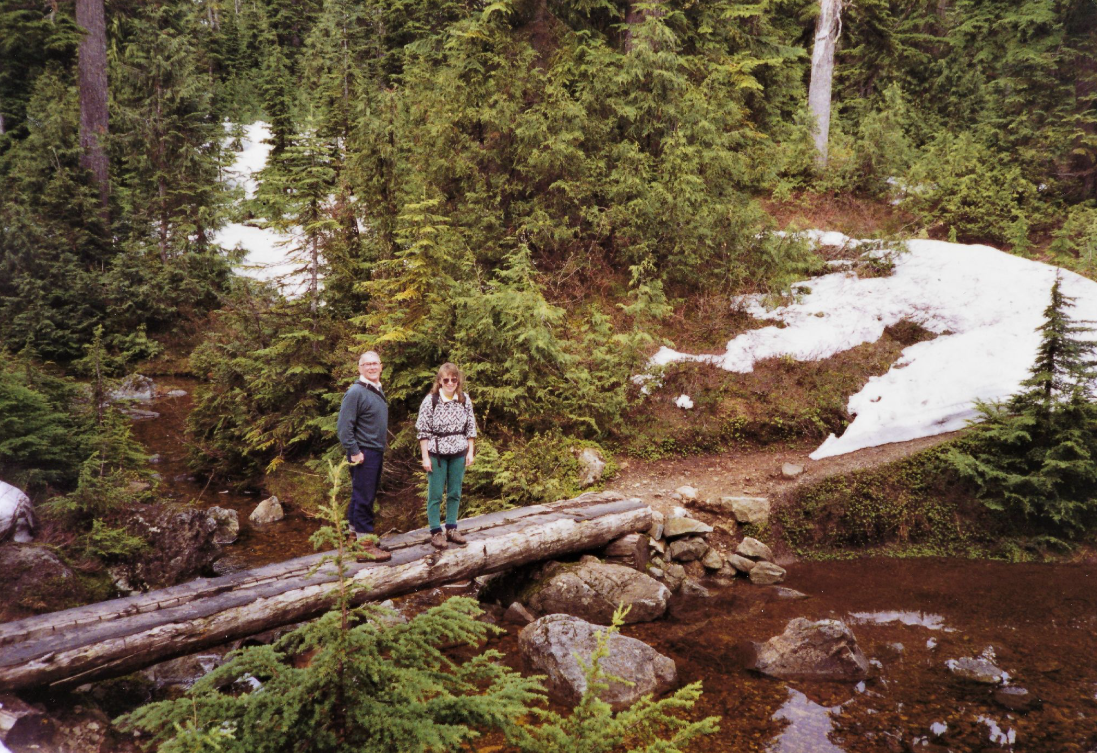
Hiking with my Dad in 1994. Photo: Rosemary Morrison
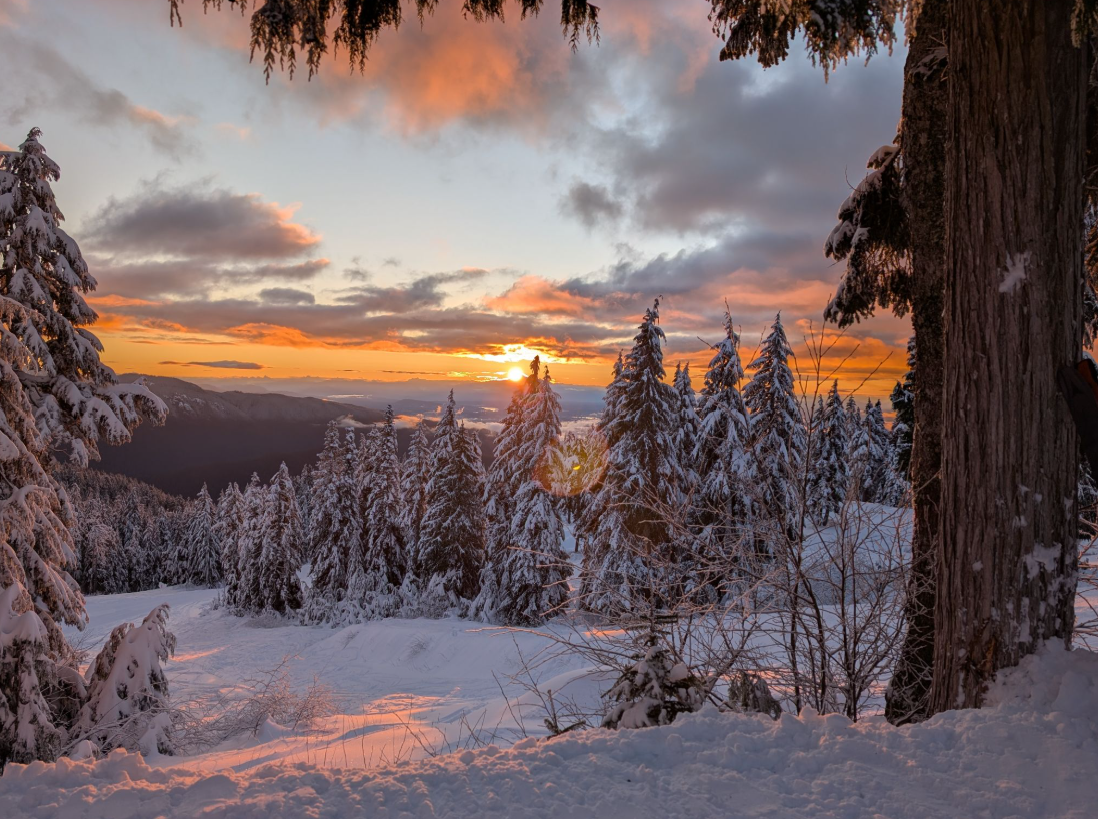
Early morning light. Photo: Janet Baker
My work for the resort doesn’t give me any insight into their plans. I just taught skiing. The information here comes directly from public information made available by Mount Seymour, along with comments from people on social media and other sources about some of the concerns.