

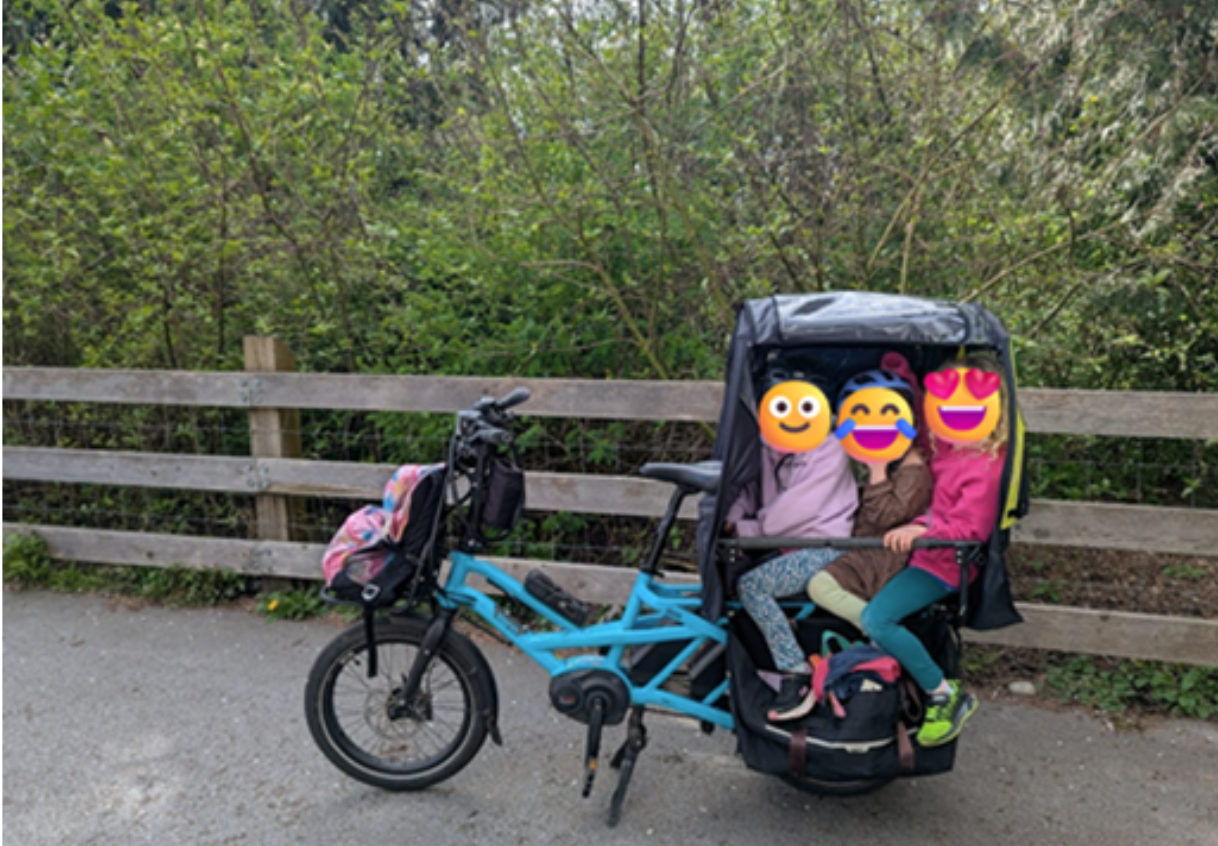
Our electric cargo-bike hauls the kids and their stuff back and forth to school. Photo: Brady Faught
Our Family hasn't paid a gas bill in years. Here's what that looks like.
There's a moment in most evenings when I look around our apartment and feel something I can only describe as quiet satisfaction.
No gas furnace humming. No monthly bill arriving from FortisBC. No trips to the gas station, no oil changes, no carbon monoxide detectors. Just a family of four — in North Vancouver — living a completely ordinary, comfortable life, powered almost entirely by clean, made-in-BC electricity.
We didn't set out to become an "all-electric household" all at once. It happened incrementally, one decision at a time. But now that we're here, I find it hard to imagine going back. And when I look at the numbers, I really find it hard to imagine going back.
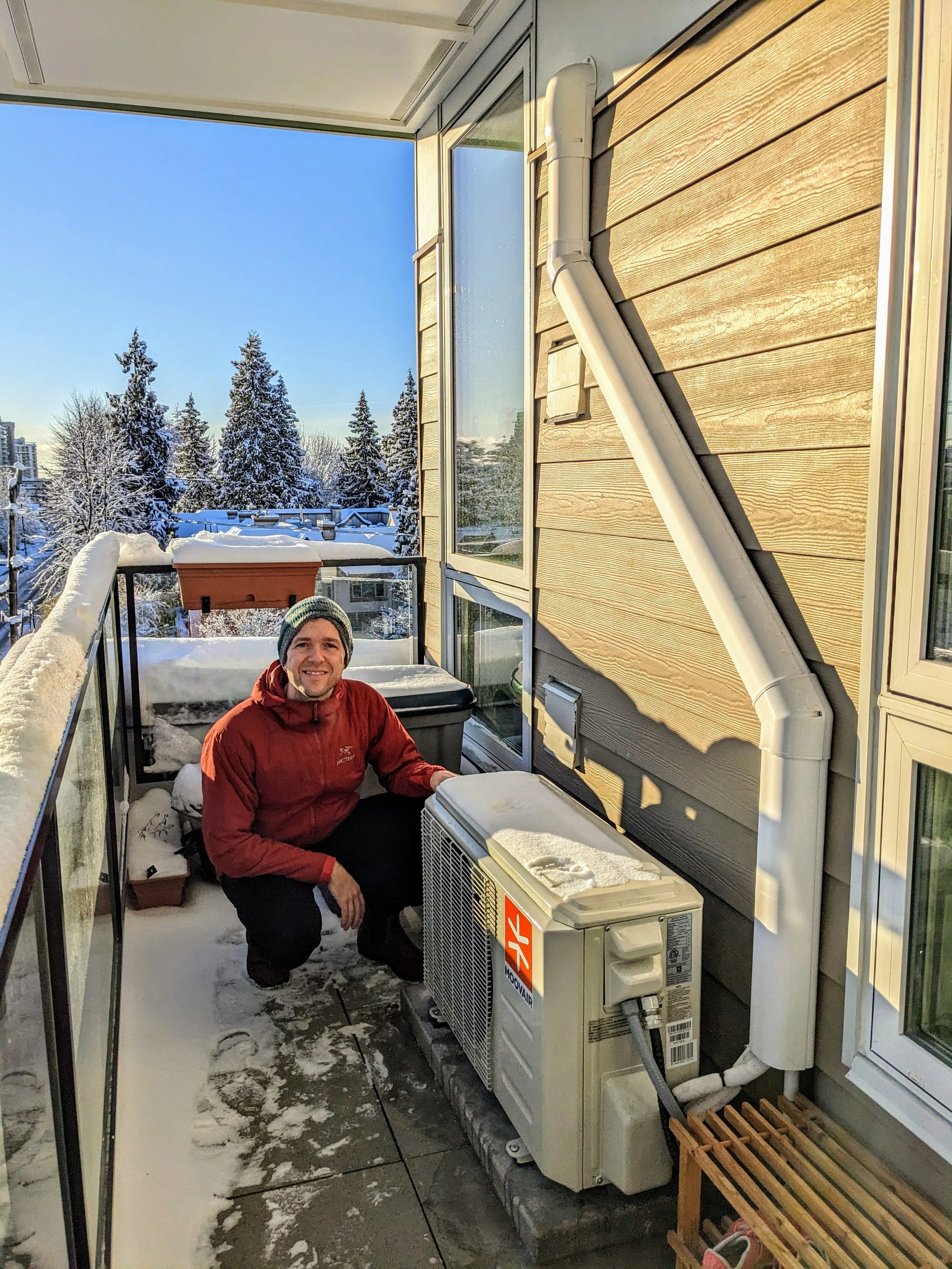
Our heat pump working away on a cold, snowy day. Photo: Brady Faught
What ‘all-electric’ means in our home
We live in a 2-bedroom condo in Central Lonsdale. Here's what powers our daily life:
Two heat pumps — one for heating and cooling our unit, one for our building's hot water system (a central CO₂ heat pump, if you want to get into the weeds). More heat pumps in our parkade pull all the warmth our building needs right out of the air and into our hot water. Side perk from the water heating: air-conditioned parkade in July.
An induction cooktop — faster, more precise, and safer than gas. If you haven't seen what induction does to a pot of water, check out my induction cooktop magic trick.
A used 2019 Tesla Model 3 — our road trip car, our ski trip car, our ‘fit the whole family and all the gear’ car.
An electric cargo bike — for school runs, errands, and the days when it’s faster than getting stuck in traffic down the Hwy 1 cut.
No gas. No combustion. No fluctuating fuel costs, especially amid Middle East turmoil.
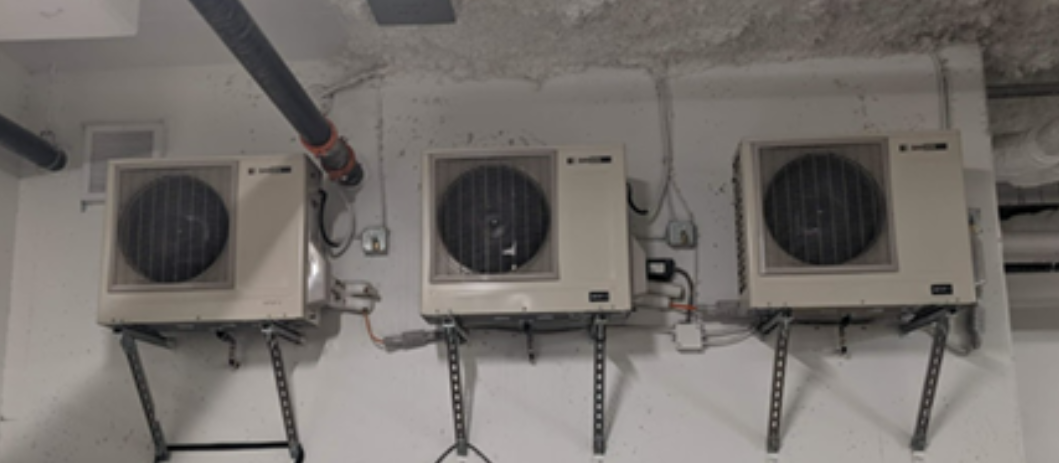
These three heat pumps pull all the heat we need for our hot water out of the air in our parkade. Photo: Brady Faught
But isn't electricity more expensive?
This is the question I get most often, and I understand why. The assumption is deeply embedded. “Gas is cheap.” “Electricity is expensive.” “Switching costs money.”
So let me share what our actual bills looked like in 2025.
Our household's monthly average — covering heating, air conditioning, hot water, all household electricity, and all driving including several road trips — was $94.
To put that in perspective: a single fill-up for a typical SUV in Metro Vancouver runs well over $100 right now.
Our ski trip to Sun Peaks? Round-trip under $40, including a mix of home charging and fast chargers along the way. The same trip in a gas truck would run $200 or more.
And heat pumps take energy from the air, so for 1 kWh of electricity used, you can get 3 or more in total - no gas furnace can be 300% efficient!
Our used Model 3 cost $32,500 — not cheap, but less than most new gasoline vehicles today, and without the ongoing fuel and maintenance costs that stack up over time. No oil changes. And over the life of the car, we'll save thousands of dollars that would otherwise go straight to the gas companies.
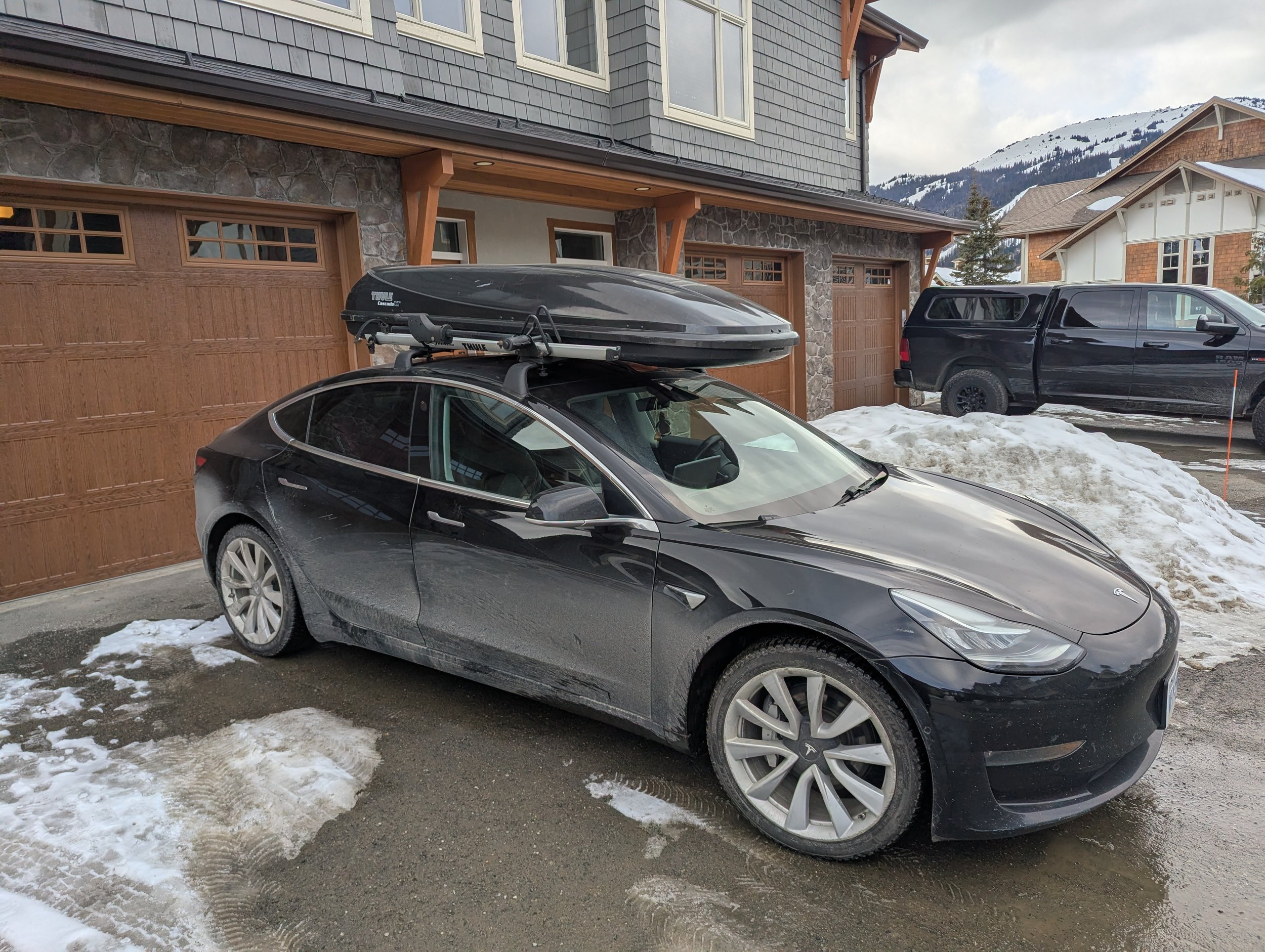
Our trusty EV on a family ski trip. Photo: Brady Faught
It's not just cheaper, it's actually better
I want to be honest here: going electric wasn't a sacrifice. If anything, our quality of life went up. Induction cooking is just better, faster heat, precise control, and a flat surface that wipes clean in seconds. Air conditioning from a heat pump in a North Van summer is no small thing. Our kids love riding on the cargo bike. And there's something genuinely freeing about knowing that our home energy costs are set by BC Hydro's regulated rates, not by whatever's happening with pipelines, OPEC quotas, or shipping lanes in the Strait of Hormuz.
My bike runs on oatmeal and bananas. Our home and car run on Canadian renewable electricity. That feels like the right direction.
The 3-kids and all their stuff SUV school pick-up machine. Photo: Brady Faught
This isn't just our story
Our family's experience is becoming more common across the North Shore, and that will continue to accelerate as heat pumps become standard in new buildings, EVs become more widely available and cost-effective to buy, and our communities continue to invest in the infrastructure that makes active transportation increasingly practical for everyday people.
This is exactly the kind of transition that Better North Shore exists to support. With the right policies, the right planning, and elected officials who actually understand where the world is heading, we can build communities that are:
More affordable for families — lower energy costs, less dependence on volatile fuel markets
More comfortable — better heating, better cooling, better air quality
Cleaner — dramatically lower greenhouse gas emissions and indoor and outdoor air pollutants, without any change in quality of life
More Free - being able to get around by cargo bike without traffic concerns is incredibly freeing. Try one out at the library for free!
That future isn't a distant ambition. For our family, it's a Tuesday
If this article resonates with you and your values, please sign up for our mailing list. We're building a group of like-minded people who want to see the vision we've outlined on these pages.