

Reducing carbon emissions and building more homes are NOT mutually exclusive goals
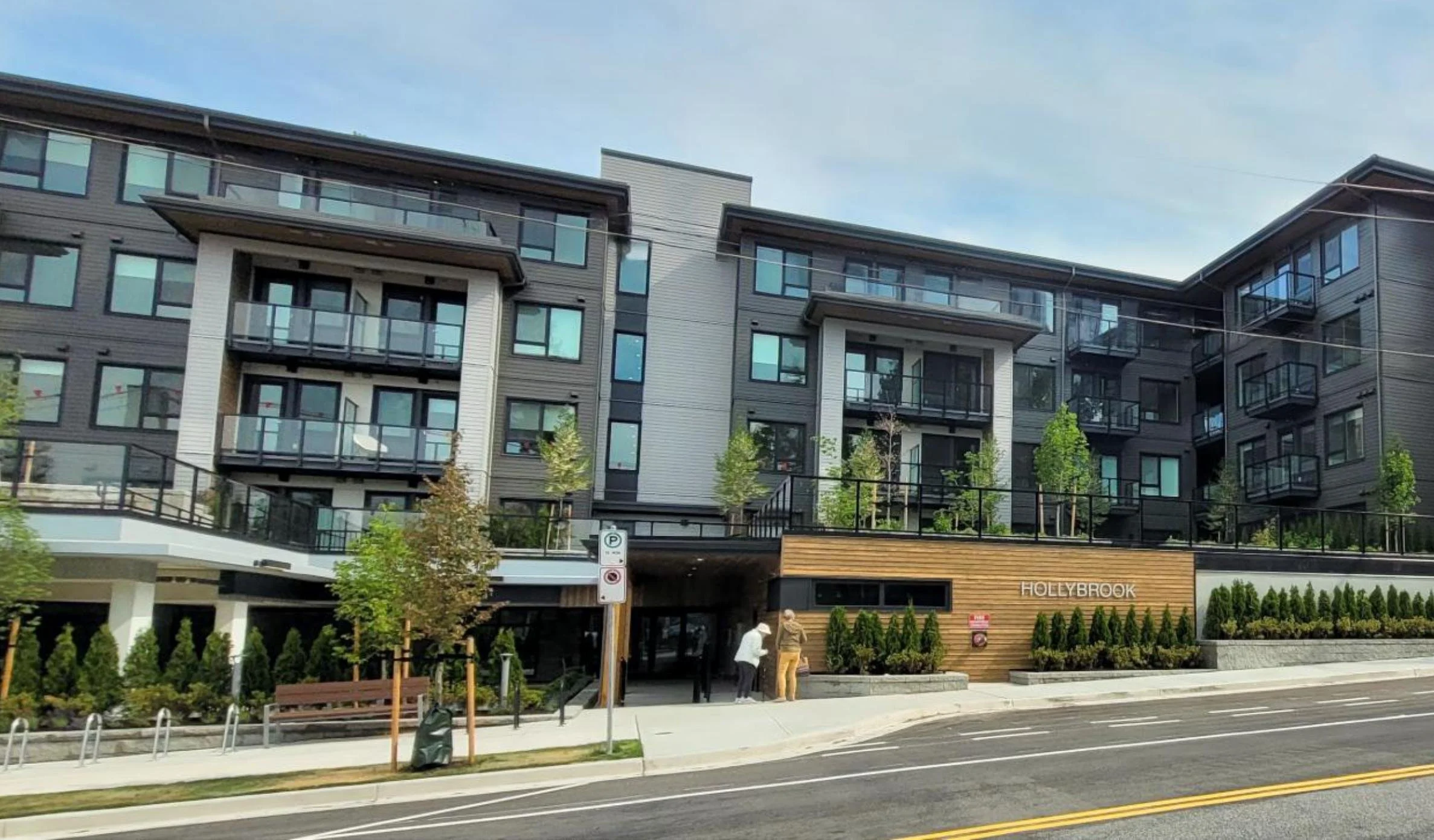
Municipalities can set their own step code requirements. The new Hollybrook building on Queens meets carbon step code EL-3 and energy step code 3.
Reducing emissions and building more housing are not mutually exclusive goals. We’ve been seeing movement on climate change, in the shadows, mostly at the municipal rather than the provincial or federal level. The heroes aren’t well-known or flashy. They’re apt to be soft-spoken, careful, and studious. But suddenly, their quiet work is imperilled, and the mission they’re engaged in is thrust into the limelight. The issue is BC’s Carbon Step Code.
What is the Carbon Step Code?
In May 2023, the BC government introduced the Carbon Step Code. It aims to reduce carbon emissions and complements the earlier Energy Step Code, which targets reduced energy consumption in new buildings. By 2030, all new buildings must meet the highest Carbon Step Code level.
The diagram below shows the Carbon Code requirements for small structures and family homes.
The first level, EL-1, or Emission Level 1, only requires a report on emissions, not their reduction.
To attain EL-2, a builder has to provide electric heating for either domestic water or space heating.
At EL-3, a builder must install both electric water heating and space heating.
At EL-4, the building has to use electricity for cooking as well.
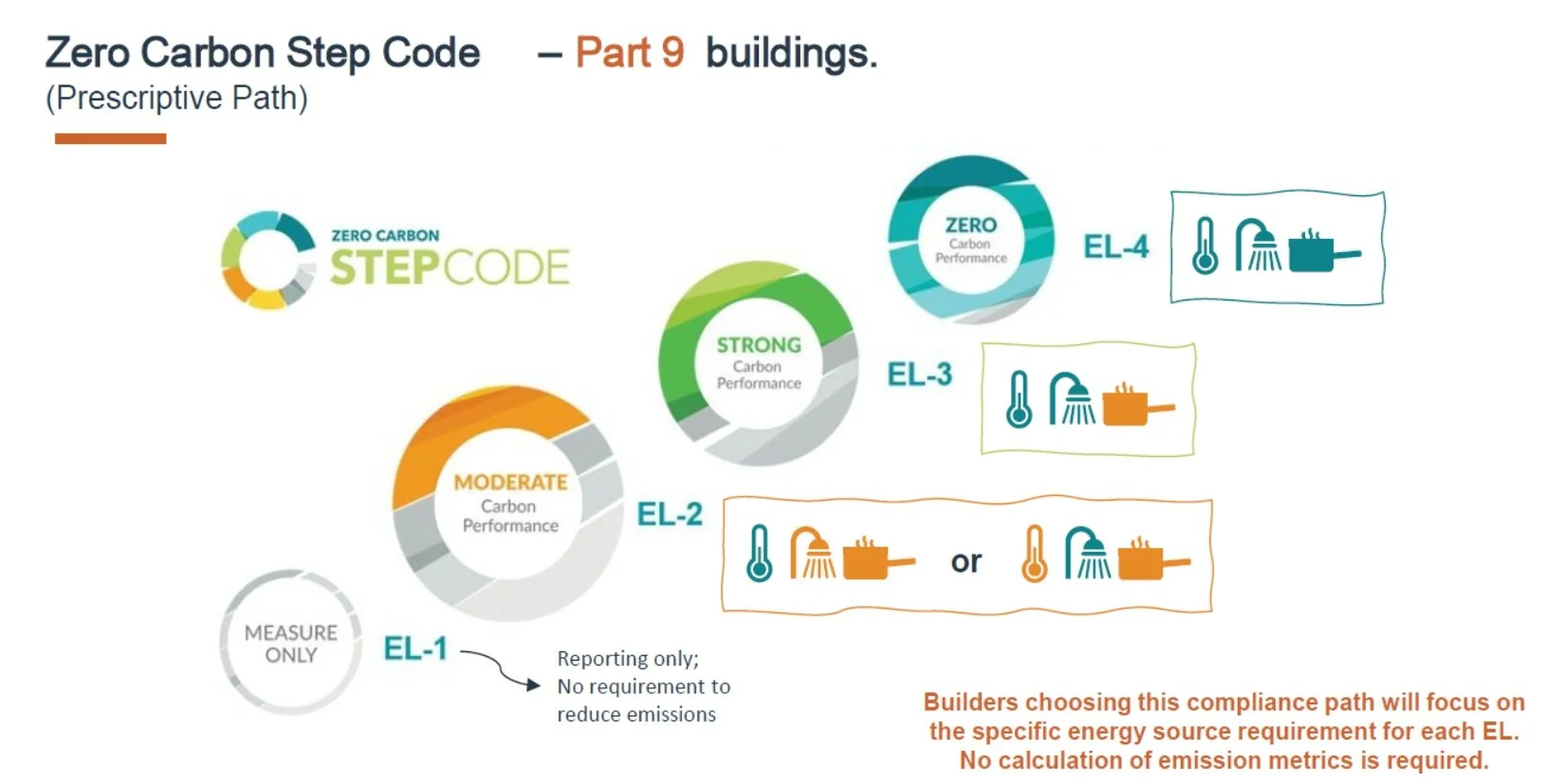
Each level requires more electrification. At the top end, heating/cooling, hot water and cooking are all powered by electricity.
Here on the North Shore, the City of North Vancouver, West Vancouver, and the District of North Vancouver have strong energy and carbon step code requirements for new houses at Step 4 and EL- 3.
A municipal opportunity for climate activists
Today, the province only mandates that homes meet the lowest standard (measure-only) under the Zero Carbon Step Code. However, municipal governments can require homes in their jurisdictions to meet a higher benchmark before 2030. In BC, many of them have. In urban centres, buildings are often the largest source of carbon emissions. Sixty percent of Vancouver’s carbon pollution comes from buildings. If a municipality adopts EL-4 for new buildings, it can make a positive difference in its carbon emissions now and in the future.

Sunil Singal, climate champion has been encouraging municipalities to reduce carbon by adopting higher step code requirements.
In 2023, Sunil Singal was named a “climate champion” when the CBC show “What on Earth” asked listeners to nominate people who have made a difference in their communities. Today, he is a Safe Cities campaigner with Stand.earth, an NGO that looks for large-scale solutions to climate and environmental problems. Singal has been encouraging municipalities to reduce gas use in new buildings. In a Zoom interview, he stressed that local governments were not required to adopt EL-4. “It is voluntary. Municipalities can adopt it if they wanted to. I often say that local governments are on the front lines of climate change, and they're the ones who want to reduce emissions as much as possible, but until recently, they didn’t have the tools to do so.” The Carbon Step Code was an ideal instrument.
David vs. Goliath
In May 2026, Ken Sim, the mayor of Vancouver, threatened to undermine progress on carbon emissions in the City of Vancouver by putting forward a motion to revert to the minimum Carbon Step Code Level from its current EL-4. This is significant because Vancouver is BC’s largest municipality and has significant influence beyond its boundaries.

Fortis pays people to lobby government officials to allow gas for heating and cooking.
Natural gas distributor, Fortis BC has mounted stiff opposition to heating and cooking with electricity. It is the province's largest gas supplier, with 1.3 million natural gas customers, deep pockets, and extensive access to our provincial government. The Office of the Registrar of Lobbyists for BC reported that in the last 12 months, Fortis’ paid lobbyists have approached senior public officials in the BC government 226 times. In other words, it has lobbied the government almost every working day. Who did Fortis approach? The list included our Premier, MLAs, Ministers, Deputy Ministers, and Crown Corporation executives. A Fortis lobbyist contacted Adrian Dix, Minister of Energy and Climate Solutions, 16 times in the last 12 months.
When city councils reach decisions about the Carbon Step Code, spokespeople from Fortis BC or their allies are usually there too, lobbying, making presentations, and trying to persuade local officials to delay the adoption of EL-4.
The Carbon Step Code legislation only applies to new homes. In BC, 48,000 new homes were registered in 2025, just 2% of the total housing stock of 2,212,000 homes. Even so, representatives from Fortis have argued in favour of providing these homes with gas hook-ups as well, thereby locking in fossil fuel dependence for decades to come.
Ordinary citizens pushing for action on climate change at the local level are volunteers who don’t get paid for their time or effort. But city councils do give them time to speak and participate in the decision-making process. The playing field is not equal, but it seems a little less unequal than at the federal or provincial level.
What went down in Langford, BC
On April 20, 2026, Langford, one of the fastest growing communities in BC, took an important vote—whether or not to require new buildings to meet the highest carbon standard. Kerrian Coady, the CEO of The Canadian Home Builders Association of Vancouver Island, and a supporter of Fortis, arrived to have her say. Singal said she “used similar tactics we saw Fortis BC reps deploy in Oak Bay, showing up at the last minute, right before Council voted, to instill fear and uncertainty about the proven benefits of the ZCSC [Zero Carbon Step Code].”
Coady prefaced her remarks by saying that, of course, she welcomed building more efficient homes. She also complimented local builders on the improvements they had achieved so far. She then went on to say that she was speaking from “the industry perspective” and had “concerns” about the data—about costs and timelines, stating that it didn’t “align” with numbers she had seen. She wanted to supply Council with “real industry data,” and suggested they delay the vote and take time to have staff “work” with her organization to review the city's data.
Coady ignored the thorough work done by Vijitha Mammen (Climate Action Planner for the City of Langford), who gave a report to council. Mammen explained that staff had done a careful analysis of the homes constructed in 2024. Half were at EL-2, a quarter were at EL-3 and another quarter were already at the highest level, EL-4. In other words, going to EL-4 did not look like an impossible stretch. Staff had also investigated the costs of building at the Step 4 level. This was “real” data too. Mammen looked at cost increases when moving from EL-1 to EL-2. There was a range: from zero to 1%. Going further up the step code to EL-4 again resulted in a range of cost increases, from 0.2% to 1%. Also worth noting was that some EL-4 houses had dramatically lower operating costs, others did not. It depended on what equipment was selected. Heating a home with baseboard heaters, for example, resulted in much higher utility bills than relying on a heat pump.
Public Participation in Langford

Most members of the public who spoke at the meeting in Langford were in favour of going to the highest carbon step code. One person explained that he had purchased a condominium in Langford that he liked a lot. However, he was not pleased with the gas stove in the kitchen—a health hazard for a senior like himself with COPD. (Children are also negatively affected by gas stoves, which give them a 42% increased risk of experiencing asthma symptoms.) Retrofits are expensive, the condo-owner observed ruefully. With payments for a gas fitter, electrician, dry-waller, and a new appliance, the cost was north of $7000. He urged council to vote for the early adoption of EL-4 and save Langford residents from having to pay for renovations later on.
Council voted unanimously to adopt the highest step code
Jane Devonshire, another member of the public who made a presentation to Langford, said, “The only one I was worried about was the mayor, because before, when I presented, Mary [Mary Wagner, Council Member], said, ‘Oh, the mayor's not convinced.’ Fortis is big in Langford. They have their headquarters [main operations centre on Vancouver Island] here.”
Working for change at the local level is a painstaking process
Every vote counts. And it takes time. The decision in Langford was three years in the making. It isn’t always successful. In February 2026, Coquitlam voted on whether to adopt the EL-4 building standard. The climate champions lost by one vote. Coquitlam decided not to accelerate the adoption of EL-4 and wait until 2030 when the change was mandated by the province. Still there is notable progress.
BC Step Code map
Focal Engineering in Victoria posted a map on its website showing how many jurisdictions in BC have adopted Energy and Zero Carbon Step Codes that exceed the province's minimum standards. Below is a screenshot.
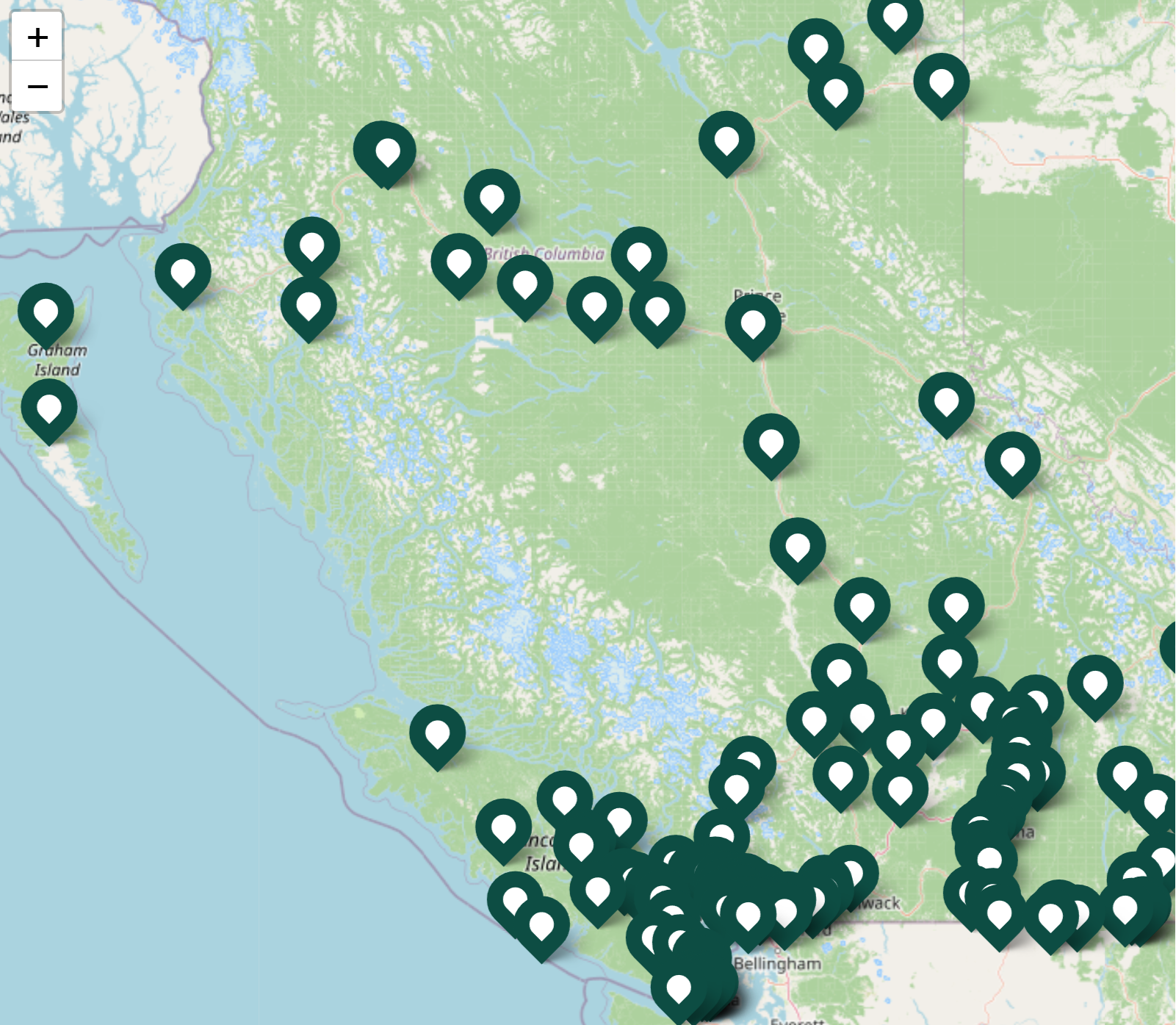
If you want the interactive experience, click on THIS LINK to find out the specific details about each community on the map.
Singal told me that over 32 communities have adopted the Zero Carbon Step Code. He said,” Because of all this work, nearly 50% of new residential building starts have adopted the Zero Carbon Step Code above minimum levels.”
Intertwining crises: housing
We’re facing multiple social, economic, and environmental problems, but that doesn’t mean we can only solve one problem at a time. In his motion to Vancouver Council, Ken Sim reminded everyone that the province was trying to “accelerate the delivery of new homes.” There is no reason we cannot achieve that goal and work on carbon pollution, as Victoria's example shows. In July 2024, Victoria set a Carbon Step Code 4 standard for new construction–one of the first cities in BC to do so.
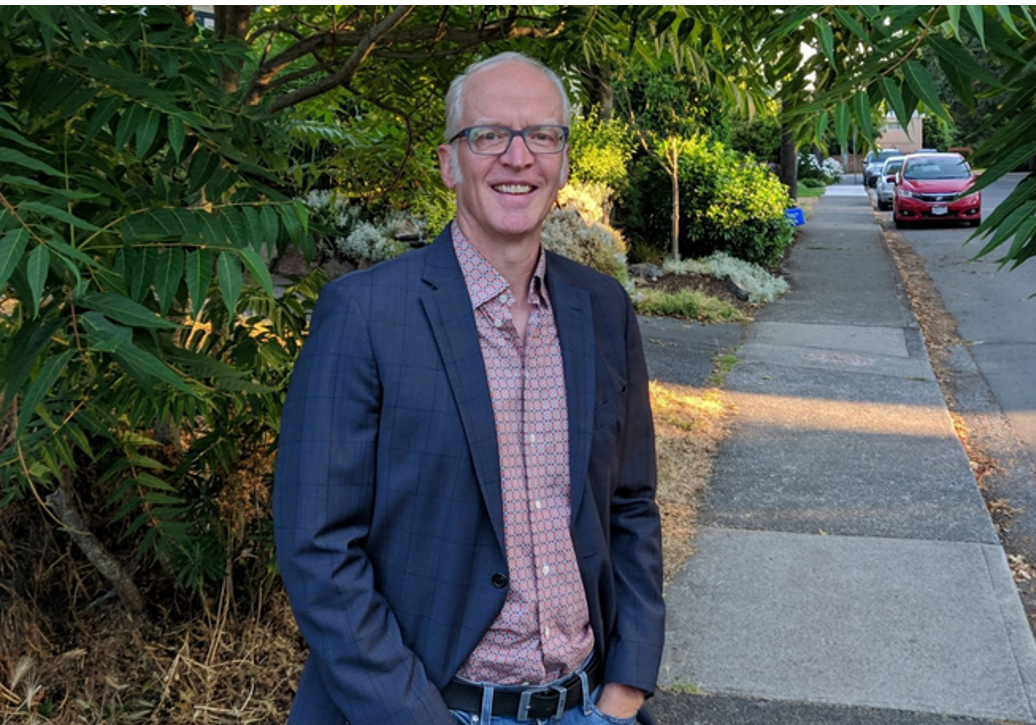
Victoria Councillor, Dave Thompson
I asked Dave Thompson, a Victoria Councillor, whether housing starts in the city have been affected. He said, “We've approved a record amount of housing over this term, far more than any previous council that I'm aware of. Developers are coming to us with proposals. We've got a large number of cranes downtown right now, and smaller projects throughout the rest of the residential fabric. So, I don't think you have to compromise on climate action in order to get housing built. They're both crises. The housing crisis and the climate crisis. We’ve got to go forward quickly on both of them.”
In October 2023, the provincial government gave ten BC cities targets for new housing units to be completed in the next 5 years. Victoria was given a goal of 4,902 units. It exceeded its targets for the first two years and by November 2025 had completed 48% of its 5-year goal.
Intertwining crises: surging oil prices
Building homes to the highest carbon standard is better for the climate. But going this route also has other pluses: lower operating costs for homes. This advantage is likely to increase in the future. Jami Makan in “Building Electrification key for BC Energy security,” (Business in Vancouver), points out that in 2025, Fortis jacked up its rates for gas by 17.5% and in 2026, added another 11.1% increase. Electricity from BC Hydro went up 3.75% in each of those years. Over the last 6 years, Fortis-supplied gas has gone up 46%, whereas BC Hydro-supplied electricity has gone up 12.5%. These increases in gas prices occurred even before the recent geopolitical turmoil and the closure of the Straits of Hormuz. Using home-grown electricity allows us to uncouple ourselves from the volatile global fossil fuel market. We get to enjoy lower, more stable energy prices.
Intertwining crises: public health
When I was growing up in Vancouver, no one had air conditioning. But global warming is now so pronounced that a device for cooling your home may save your life. During the 2021 heat dome, 619 people died in BC from the effects of high temperatures. As a result, the BC government changed the Building Code in 2024. It now requires that new buildings have at least one room that can be cooled to 26 degrees Celsius.

Jessica McIlroy, City of North Vancouver councillor and the director of government relations with the Pembina Institute
Jessica McIlroy, a councillor for the City of North Vancouver and the director of government relations with the Pembina Institute, said, “This means that we actually had to change how we build. We found a segment of builders who have just switched to heat pumps because that's the easiest way to meet that code requirement, rather than installing furnaces and air conditioning. There is a shift happening. I think it’s important to recognize that a lot of the building performance requirements and code changes are fundamentally about health and safety. We have to talk about all the benefits of an electric or highly efficient building. We spend an incredible majority of our lives indoors. And the quality of that building has a significant impact on our health and well-being. It’s not just heat, but moisture getting in, smoke, mould and other impacts.”
In a previous story, “Cost-effective, all-electric, net-zero homes,” I talked to Bruce Murdoch, a builder of high-performance homes in Cranbrook, BC. He’s made the shift to heat pumps and stated that in his experience, building an all-electric home is actually cheaper than constructing one with a gas hook-up. Murdoch said, “The comparison is no longer heat pump versus gas furnace. The comparison is now a heat pump versus a gas furnace plus air conditioning.” On one recent build, by installing a heat pump instead of a gas furnace and an air conditioner, Murdoch’s was able to save $ 4,000. He garnered further savings by not putting in a gas line. Having a heat pump in this situation is better for your health and easier on your budget.
In a world of intertwining crises, climate solutions can help us deal with other problems—affordability, health, and housing. A welcome synergy in a troubled world.
If this article resonates with you and your values, please sign up for our mailing list. We're building a group of like-minded people who want to see the vision we've outlined on these pages.