

Should we charge for parking in parks?
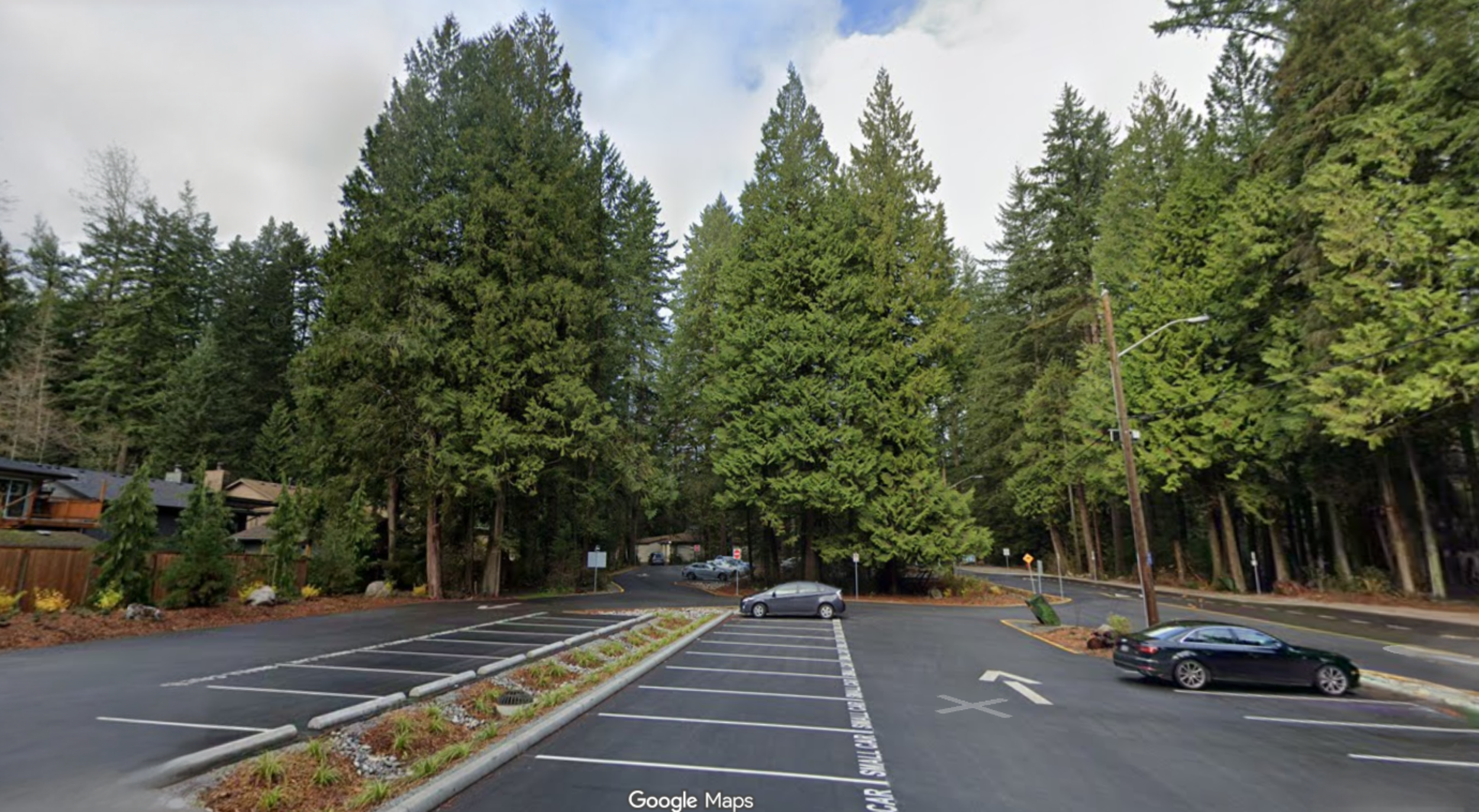
Pay parking is in effect at Lynn Canyon Park during high season, from March 1st to October 31st, 8 a.m. to 6 p.m. Parking is $3/hour for a maximum of 4 hours. Photo: Google Maps
Every now and again, I see the issue of parking fees come up on social media. It's a thorny topic, often rousing passionate opposition from people who have enjoyed ‘free’ (publicly subsidized) parking on the North Shore for, well, forever. There were some good questions posed by a user in a recent online post, specifically aimed at whether we should pay for parking in our public parks. My answers from that exchange are below - the case for user-pay turns out to be pretty simple.
Q: Should access to nature and public parks be treated the same as commercial street parking?
A: Yes. Just like spaces in commercial areas, these spaces need to be monitored and maintained. That costs real taxpayer dollars. Parking spaces in parks also impose an unrecovered opportunity cost, e.g. the land can’t be used for restored habitat, more trail space, a conservation buffer, picnic areas, etc. The hourly fee can probably stand to be lower than in a commercial area.
Q: Who should pay for maintenance and management, everyone through taxes, or only people who can drive and afford the fees?
A: People who use the spaces should pay for the maintenance and management of those spaces. Parking fees are user fees.
Q: Is there a difference between managing demand in busy retail areas versus charging at remote trailheads with no alternatives?
A: Any area where demand management (turnover) is an issue should be accordingly priced.
Q: How do families, seniors, or people without easy transit options fit into this?
A: People who arrive by transit, on foot, or by bike don’t need to park, so they don’t have to pay. Families and seniors who arrive by car pay per use for the reasons above. In short, parking spaces cost real money to maintain and manage, and they occupy land that could otherwise serve other uses. User fees are the natural funding mechanism - they can probably be lower than the fees in commercial areas, but the principle is the same.
Bottom line: Wherever turnover and demand are issues, pricing makes sense.
The high cost of free parking
Donald Shoup, an economist and professor of urban planning at UCLA, spent his career studying the negative economic and social impacts of ‘free parking’. His seminal book, The High Cost of Free Parking, has become the go-to reference manual for urban planners, transportation engineers, and community leaders all over the world. This short video is a good primer if you’d like to learn more.
If this story resonates with you, please forward this to a few friends, and suggest they join our email list. We're building a group of like-minded people who want to see the North Shore positively embrace and manage the many changes we face. Thanks, we really appreciate it.