

Heat pump: go or no?
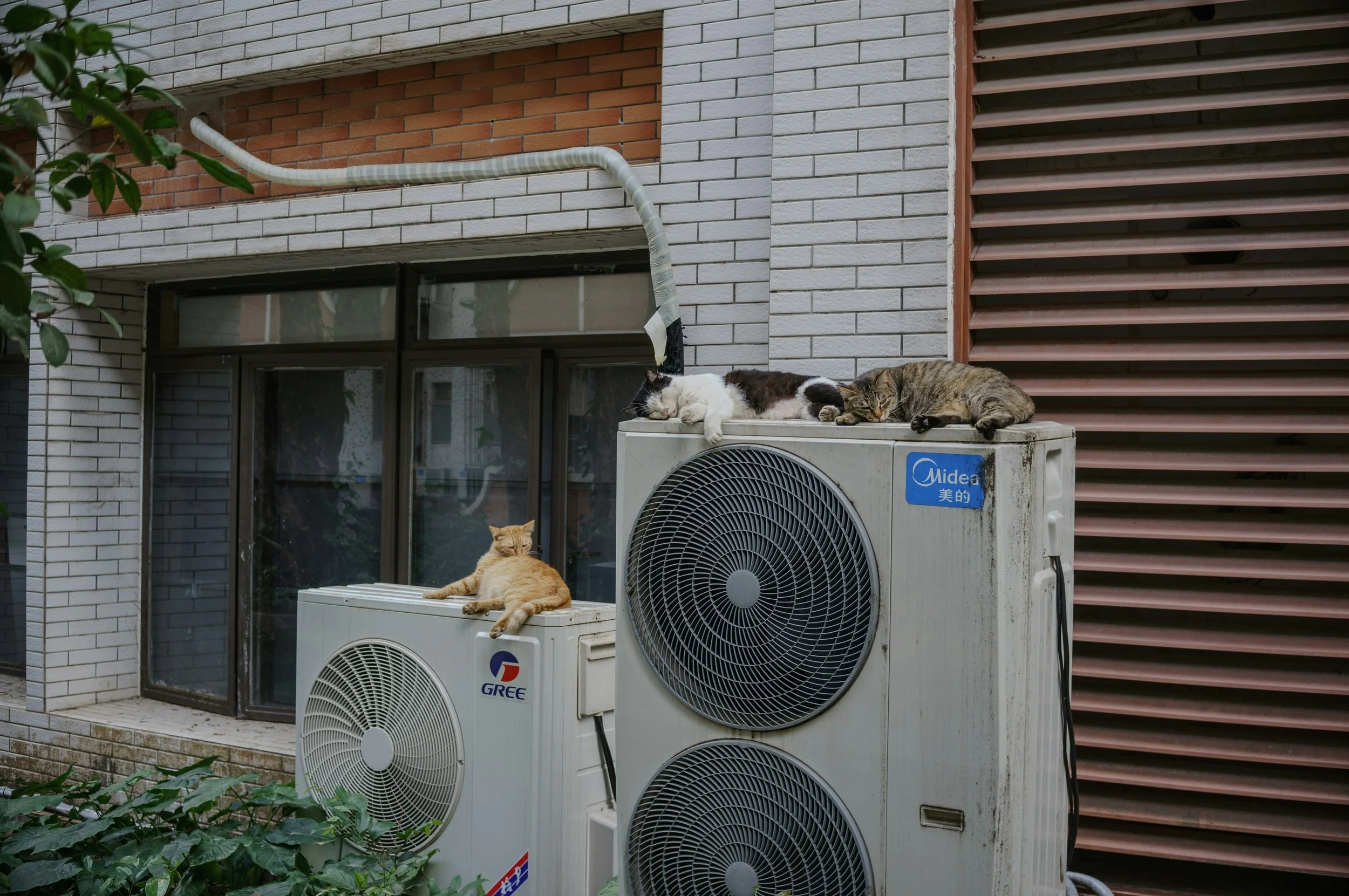
Cats enjoy the benefits of heat pumps too. Photo: Unsplash
Today 13% of all BC households use heat pumps for heating, up from 5% in 2008. From 2019 to 2023, average heat pump sales were nearly double the previous five years' average, and by 2022 began to exceed furnace sales.
Transitioning to low-carbon buildings with heat pumps
Installing a heat pump is a popular retrofit, and there are many options. To find out more about this, I turned to Mary McWilliam, a project leader at the Zero Energy & Emissions Building Learning Centre at BCIT. The centre exists to accelerate the transition to low-carbon buildings in Canada. It provides training for workers in the building industry and helps them understand practices associated with the BC Energy Step Code, the Passive House Standard, and low-embodied-carbon design. The courses are led by experts who work in the field. Heat pumps are an important subject.
The Centre has created an AFRESH Home to showcase some of the most innovative yet practical ideas in sustainable housing today. So far, it has received 55,000 visitors.
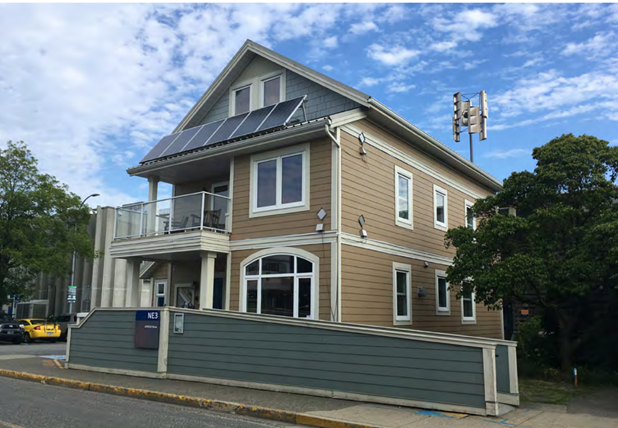
AFRESH, Demonstration House on BCIT's Burnaby Campus
Mary McWilliam lives in Lynn Valley and owns a house built in the 50’s. She says, “The single-pane glass was upgraded to double-pane, and then it’s been upgraded again to better double-pane. It’s still not triple-pane, but there’s been lots of improvements over time. It’s a ducted house that’s been retrofitted with a heat pump. And it is a cold climate unit. It does everything we need. I also have a separate heat pump for my hot water.” In other words, McWilliam walks the talk. She can draw on her own experience as well as theory. We talked about several issues a homeowner should consider when planning to install a heat pump.
What is the CSA F280 heat loss and gain calculation for my home?
McWilliam says, “At the initial meeting with a contractor, you can explain what your needs are. “You may say, ‘I really need cooling upstairs only.’ Or ‘I am worried about forest fire smoke and I want to know how I can close up the house. I don’t want to open the windows to cool when we end up with a couple of weeks of really bad air quality.’ Or ‘I'm really worried about decarbonizing and switching to a cleaner heating source for my home.’” After this initial meeting, the next step is a load calculation.
The CSA F280 heat loss and heat gain calculation, developed by the Canadian Standards Association is used to size heating, ventilation and air conditioning equipment and provide adequate comfort and indoor air quality to its occupants.
McWilliam said, “Correct sizing is so important. It's important for protecting the life of the equipment and ensuring it operates efficiently.” A load assessment is a code requirement for a new building. “But” says McWillliam, “For retrofits it doesn’t always get done the way it should.”
The equipment in older houses is often massively over-sized for current needs, McWilliam says. The original gas furnace in her house was capable of delivering 60,000 BTU’s per hour. “But the maximum that I’ve ever used with a heat pump is between 30,000 and 36,000 BTU’s.” Improvements to the house envelope over time meant that McWilliam didn’t need as much heating capacity as before.
Is the proposed equipment listed as a cold-climate heat pump?
Traditional heat pumps lose efficiency below freezing and usually require additional heating, whereas cold-climate units can operate efficiently on their own, even at low temperatures. (My husband and I built a high-performance house in North Vancouver and moved in during the spring of 2023. In North Vancouver, homes are required to be designed for temperatures of -7 C. During the first winter in our new home, we had a cold snap in which temperatures sank even lower than that—to -13 C. Our Arctic Heat Pump, a cold-climate pump, rated to work at -35 C, managed quite handily.)
How is the airflow in the existing ductwork?
According to Statistics Canada, In 2021, just over half of Canadian households had a forced air furnace (51%), If you have an existing ducted system, and you want to replace a gas furnace with a heat pump, McWilliam says the first thing would be to look at what can you do to retrofit that existing ducted system. “Probably 95% of the time, that's going to be an easy switch over.”
But to be sure, McWilliam suggests, “Assessing the airflow on the existing ductwork is really, really important Are you going to be able to heat and cool that home with the existing ductwork, or are there some modifications that need to be made?Most of the modifications that we teach here, only affect what's in the mechanical room. We are not saying open up the walls. You can have massive improvements to the capacity of your ductwork system just by fixing things inside that mechanical room—the shape of the fittings, for example.”
What can I do if I have electric-in floor heating or electric baseboards?
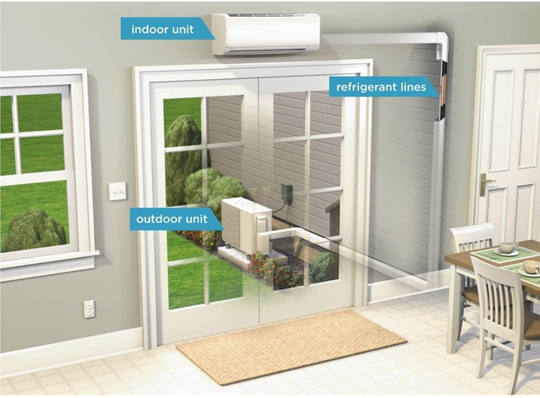
Ductless mini-split heat pump, Illustration, Natural Resources Canada
Ductless mini-split heat pumps are often an effective retrofit solution for older homes without existing ductwork, as well as for new additions, garages, or basements. Installation only requires mounting the indoor unit and drilling a 3-inch hole through the exterior wall for the conduit to an outdoor unit. Baseboards can remain in place for backup heat if needed. Like other heat pumps, these mini-split units can also supply cooling.
What if I have hydronic radiant heating (hot water in-floor) or radiators?
Air-to-water heat pumps can provide hot water for radiant floor systems and some radiator systems. Adding cooling, however, is more complex (though not impossible), as it can produce condensation under these conditions.
What can I do if I’m in a strata building?
Most strata are in the process of approving a process to accept heat pumps.
McWilliam referred me to the BC Hydro Heat Pump Retrofit Guide for Stratas (2025), an excellent resource for navigating this process. ZEIC (BC’s Zero Emissions Innovation Centre) and CHOA (Condo Home Owners Association of BC) also have a Strata Energy Advisor Program delivering free support to stratas navigating these types of retrofit plans. McWilliam says, “There are even heat pumps small enough that you can plug them into a 120-volt outlet.” They don’t require an outdoor unit, just a couple of vents to the outside air.
Do I need to upgrade my electrical panel?
I had assumed that upgrading the electrical panel would be required if you replaced a gas furnace with a heat pump. Not necessarily so, says McWiliiam. If you are renovating a home that you have occupied for awhile, you can log in your BC Hydro account and look at a year of historical data and see how much service capacity is available, An electrical service upgrade can be between $6,000 and $12,000 depending on what you need to do. And it can cause a delay while you're waiting for Hydro to come in and upgrade your service. “If you know how much electricity your home uses now and you want to add a heat pump that at max would need a 30-amp circuit, then you can look at your historic bills,” McWilliam advises. The “You may realize you've got lots of capacity. We do this in most of our classes. We send our contractors home to look at their utility bills and they are shocked at how little electricity they use. Most homes can add a heat pump without any kind of service upgrade.” (My skookum heat pump, for instance, only requires 30 amps and a dedicated circuit breaker.)
What sound levels should I expect?
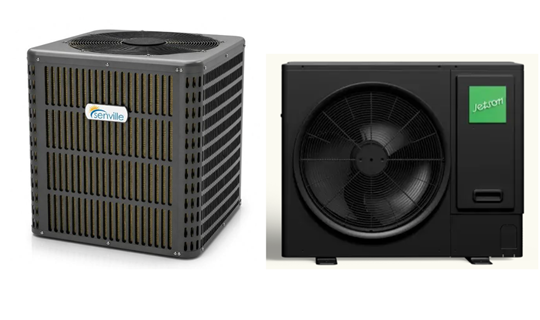
Older-style heat pumps discharge air from the top. Newer-style heat pumps expel air horizontally.
One misconception people have is that heat pumps are noisy. But says McWilliam, “Modern, especially the side discharge, inverter-driven units, are really quiet.” They expel air horizontally instead of upward. Using a variable-speed compressor, they also adjust their output to match precise temperature needs. This combination of features makes them exceptionally quiet, highly efficient, and ideal for properties with limited outdoor space. According to McWilliam, newer heat pumps can operate in the 40-60 decibel range. For comparison, she says a quiet premium dishwasher is around 40 decibels, whereas a budget model will operate at 50-60 decibels. A traditional heat pump often produces noise levels in the range of 65-75 decibels. If you want to remind yourself of what these different decibel levels sound like, you can check out “Volumes dB of Different Sounds.”
What backup heating is required?
Backup is not always required. In our house, an electric back-up boiler was installed. It was not needed even at -13 C, during the cold snap. (And I can’t imagine it getting much colder in North Vancouver.) But McWilliam says, “There may be a few cases where you need to have some backup heat or supplementary heat.” When I asked whether it is a good idea to use an existing gas furnace as backup, she said there was a challenge with that. “If you've got a gas furnace, you cannot run the heat pump and the gas at the same time. So, you can't run your heat pump to meet 80% of the load and then turn on your gas to run the missing 20%. You have to totally stop the heat pump and run all gas.” On the other hand, if you have a baseboard heater as your top-up, it can run at the same time as the heat pump. The cost of using a baseboard heater for supplemental heating for a few days a year will be pretty minimal.
What are the expected costs of installing and running a heat pump?
A heat pump provides both heating and cooling. As we saw during the heat dome of 2021, this is critical. As of April 2024, the BC government required that newly constructed residential buildings have at least one designated "living space" capable of maintaining a maximum indoor temperature of 26°C during peak summer heat. Having an appliance that can do double duty, cool as well as heat, is often a more affordable option than buying a furnace and an air conditioner.
A new generation of heat pumps can do triple duty— cool a home, provide space heating and hot water, creating the possibility of even more savings. “We actually,” said McWilliam, “installed on campus [at BCIT], a Daikin system that will do all those things at the same time. It's the first one of this new generation of Daikin Althermas in the country.”
In addition to benefiting from innovative technology, homeowners can also receive rebates on the purchase of heat pumps. Both Clean BC and BC Hydro offer subsidies to encourage their adoption.
What about the costs of running a household with a heat pump? According to an interactive tool released in March 2024 by The Canadian Climate Institute, a standard heat pump with electric backup is the lowest-cost solution for heating and cooling a detached house built in 1980 in Vancouver.
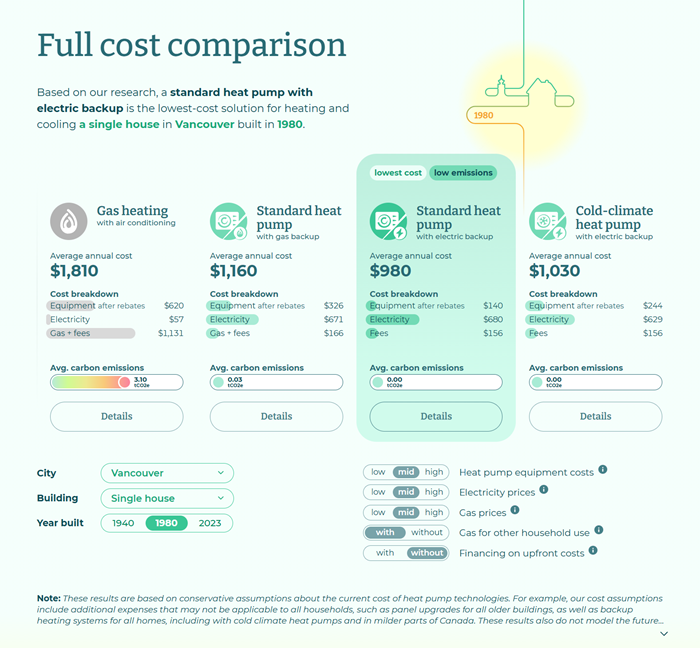
Use the Canadian Climate Institute calculator to estimate the cost to run your heatpump.
If you are interested in changing the parameters, such as looking at a different city or the age of the house, for instance, use this link to access the calculator. In the Lower Mainland, with our temperate climate and low electricity rates, the cost profile of using a heat pump is especially favourable.
If this article resonates with you and your values, please sign up for our mailing list. We're building a group of like-minded people who want to see the vision we've outlined on these pages.