How I quit feeling guilty about not working out enough
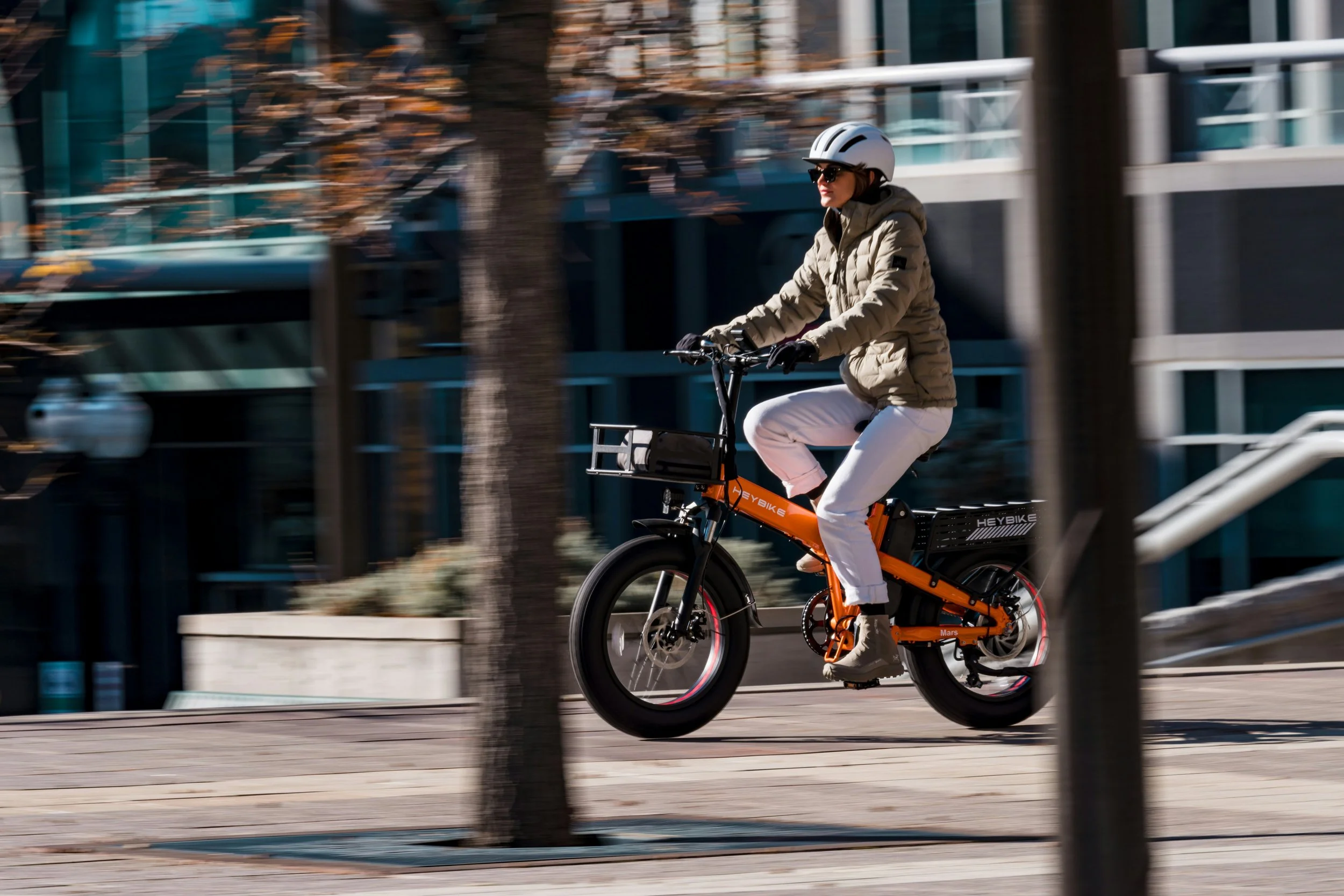
If you build excercise into your daily routine, you are bound to be more successful. Photo: from Heybike on Unsplash
I have a confession. For years, I carried around a low-grade guilt about exercise. You know the kind. It sits in the back of your mind like an overdue library book. You know you should be doing more. You've read the articles. You've seen the stats about heart disease and sitting being the new smoking. You've started the program, bought the shoes, maybe even paid for the gym membership you used eleven times.
And then life happens. Work gets busy. It rains for nine days straight. Your kid has soccer. You're tired. The couch wins. And the guilt creeps back in.
I'm done with that guilt. Completely done. And the way I got rid of it had nothing to do with discipline, willpower, or finally finding the right workout routine. I started riding an e-bike.
Exercise for exercise's sake
Look, I get it. Some people genuinely love working out. They wake up at 5:30 a.m. to run in the dark. They track their macros. They have a "leg day." And honestly — good for them. Bully for them. They're in the top 1% of humans who can motivate themselves to do extra physical activity on a regular schedule, indefinitely, without it being attached to any practical purpose.
The rest of us? We start strong. Maybe we get on a roll for a few weeks — and when you're on a roll, it feels great. But the moment something disrupts the routine — a cold, a vacation, a stressful week — the whole thing collapses. And then we're back to guilt.
Here's what I've come to believe: the problem was never me. The problem was the strategy. Treating exercise as a separate activity — something you schedule on top of an already packed life — is a setup for failure for most people. It's like budgeting an extra hour every day for something your body needs but your schedule doesn't. Eventually, the schedule wins.
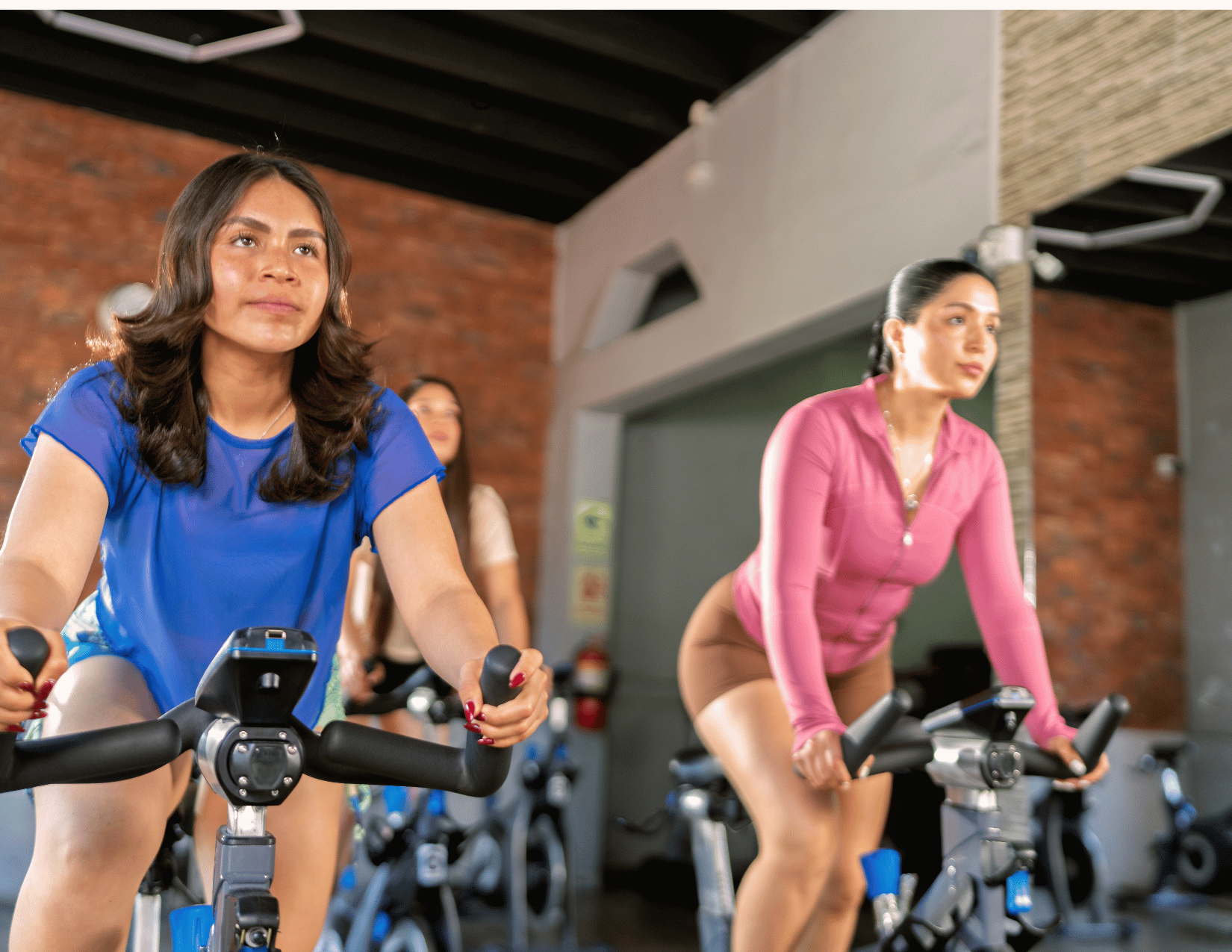
Some people genuinely love working out. They wake up at 5:30 a.m. to run in the dark. They track their macros. They have a "leg day." And honestly — good for them. Photo: Canva
Build it in, or it won't happen
The only real way for most of us to get consistent exercise is to build it into the things we already need to do. Get to work. Pick up groceries. Drop something off. Go meet a friend. If the exercise happens while you're accomplishing other things, it stops being an obligation and starts being invisible. In the best possible way.
That's exactly what happened when I got my e-bike. Since 2018, I've been riding one around the North Shore — to meetings, to the store, to the library, to appointments. I've put over 16,000 kilometres on my e-bike since 2021 alone. And here's the thing: I never once thought of any of those rides as "exercise." I was just getting where I needed to go.
But my body didn't know the difference. You still pedal an e-bike. You still push up hills — you just don't arrive looking like you ran a marathon. Your heart rate goes up. Your legs work. Over weeks and months, it adds up to a lot of physical activity. And because it's woven into my daily routine, it never falls off. There's no program to quit. There's no membership to cancel. There's just… getting around.
The guilt? Gone. Not because I finally got disciplined. Because I stopped needing to be.
The Dutch figured this out decades ago
If you think I'm just one guy rationalizing his bike habit, let me introduce you to 17 million people who've been proving this at a national scale for decades.
The Netherlands spends about $0.75 billion CAD per year on cycling and active transportation infrastructure — bike lanes, separated paths, bike parking, safe intersections. That's a serious investment. But here's the return: researchers at Utrecht University, using the World Health Organization's health assessment model, calculated that all that cycling saves the Dutch approximately $27 billion CAD per year in healthcare costs. About 6,500 deaths are prevented annually. The average Dutch person cycles 74 minutes per week — not because they're health nuts, but because cycling is simply the easiest way to get around.
That's a 36-to-1 return on investment. Exposed to numbers like that you start to realize this isn't a story about bikes. It's a story about how we design our communities.
The Dutch aren't healthier because they have more willpower than we do. They're healthier because they built a country where physical activity is the default, not the exception. They engineered the guilt away.
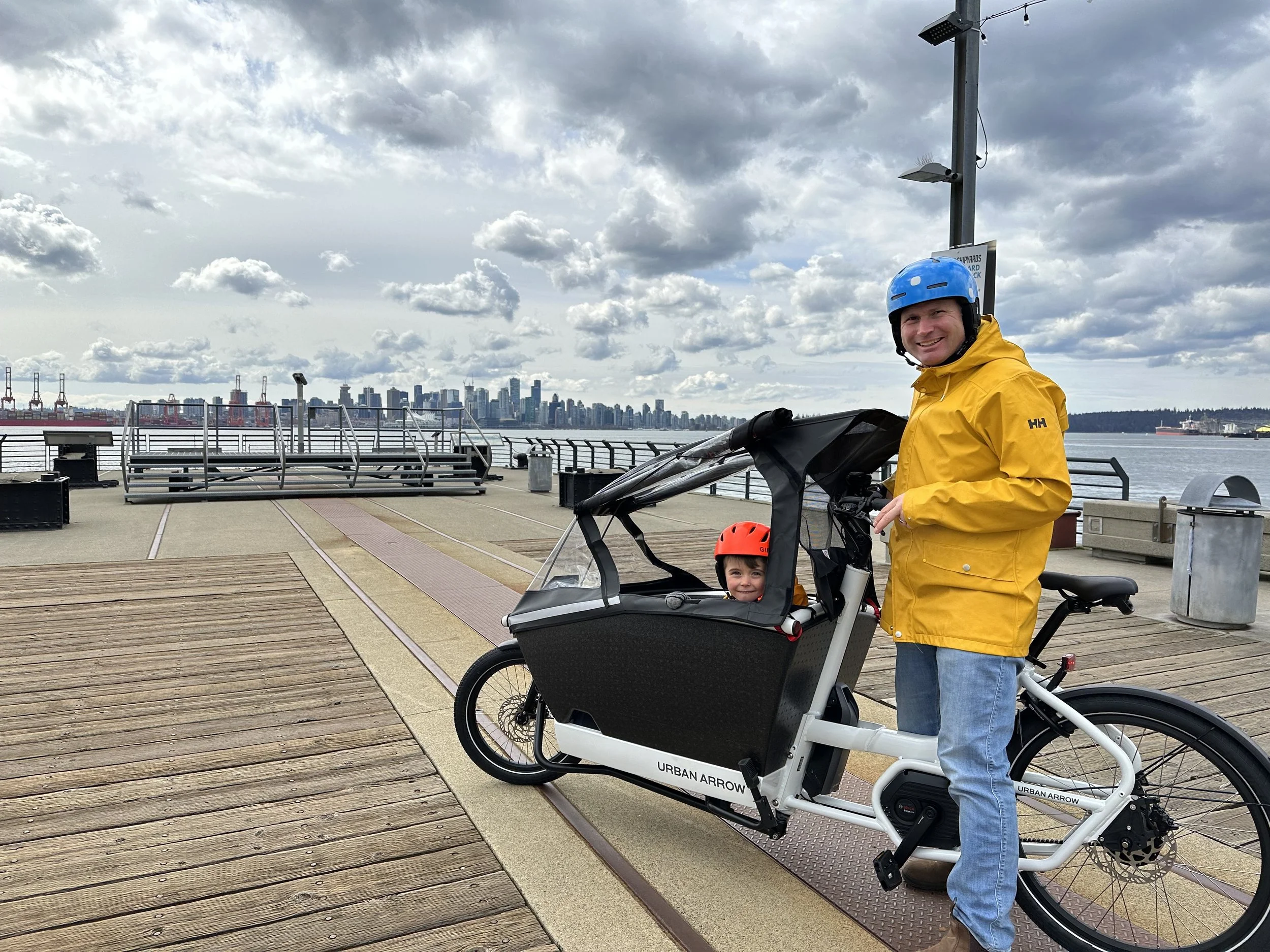
What if running errands by e-bike was the easy choice, not the brave one? The exercise would come for free — a side effect of living in a well-designed community. Photo: Duncan Wilcock
We have a design problem, not a discipline problem
Here on the North Shore, we've designed our communities so that driving is the only realistic option for most trips. Our streets prioritize cars. Our bike infrastructure is patchy and disconnected. And so most of us drive — even for trips that could easily be walked, biked, or rolled.
That's not a personal failing. That's a design problem. And it has consequences way beyond traffic congestion. It means the vast majority of our daily travel contributes zero physical activity to our lives. We sit in our cars, sit at work, sit at home, and then feel guilty about not exercising. We've built a world that removes movement from daily life and then we blame ourselves for not moving enough.
What if, instead, we invested in safe, connected cycling routes? What if our kids could bike to school? What if running errands by e-bike was the easy choice, not the brave one? The exercise would come for free — a side effect of living in a well-designed community.
This isn't a fantasy. It's what the Dutch have been doing since the 1970s. And it's what our own Official Community Plans already call for. We just need the political will to build it.
So here's my invitation
If you've been carrying around that exercise guilt — and I'm betting you have — consider that the solution might not be a new fitness app or a January resolution. It might be an e-bike. Not because you need to become a "cyclist." But because you need to get places, and you might as well get some exercise out of it.
And if you want our communities to make that choice easier for everyone — with safer bike lanes, connected routes, better sidewalk infrastructure — then we need to speak up. Let your council know that active transportation infrastructure isn't a luxury. It's a public health investment with a 36-to-1 return.
If this story resonates with you, please forward this to a few friends, and suggest they join our email list. We're building a group of like-minded people who want to see the North Shore positively embrace and manage the many changes we face. Thanks, we really appreciate it.